Why More Wineries Are Switching to Synthetic Wine Corks

Wineries across the world are rethinking their closure choices as synthetic wine corks continue gaining traction. The shift is influenced by both practical needs and evolving consumer expectations, creating a landscape where innovation matters more than tradition alone. People who work closely with wine understand how a single closure decision can shape a bottle’s entire journey, from the production line to the moment someone enjoys their first sip. This article explores why more wineries are making the transition and what it means for the future of wine
Key Takeaways
- TCA explained: Trichloroanisole (TCA) is a compound formed when natural cork interacts with certain bacteria and sanitizing agents, causing the “corked” musty smell that ruins wine.
- Synthetic wine corks reduce TCA risk by eliminating the natural compounds that lead to cork taint.
- Winemakers gain more control because synthetic wine corks deliver consistent oxygen transfer and predictable aging.
- Production costs become steadier when wineries adopt synthetic wine corks due to stable material pricing.
- Branding flexibility increases as synthetic wine corks offer customizable colors, textures, and imprint options.
- Shelf life reliability improves since synthetic wine corks resist humidity and temperature changes during distribution.
What Are Synthetic Wine Corks?
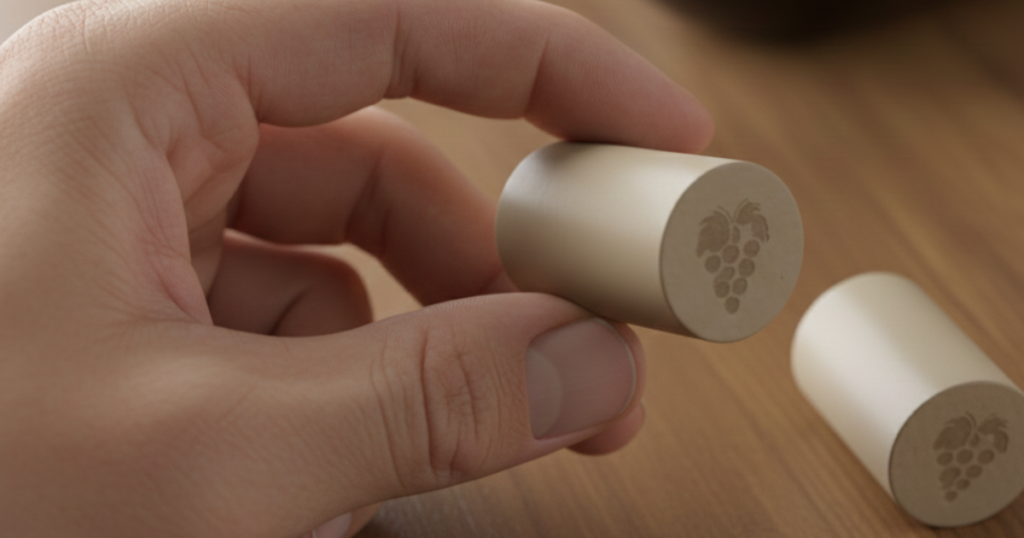
Synthetic wine corks are closures engineered to replicate the look and function of natural cork while offering more controlled performance. They differ from natural cork because they are not harvested from cork oak trees but instead created using precise manufacturing techniques that ensure uniform density and structure. These differences allow synthetic corks to avoid inconsistencies that can appear in natural materials. The result is a closure that performs predictably regardless of environmental conditions.
Types of synthetic closures
Co extruded closures are produced in a layered design that allows for consistent oxygen flow and a durable outer shell. Injection molded corks are crafted from a single mold that shapes the closure into its final form with impressive accuracy. Plant based options use bio derived materials that mimic the elasticity and feel of natural cork while offering improved sustainability profiles. Each type offers unique benefits depending on a winery’s goals and style of wine.
Materials used in production
Plastic polymers form the base of many synthetic corks because they provide stability and moisture resistance. Some modern producers are incorporating bio based plastics that reduce dependence on fossil fuels. These materials can be engineered to achieve specific oxygen transfer rates that match the needs of different wines. The flexibility in material science allows wineries to choose closures that match their desired bottle aging and consumer experience.
Why Wineries Are Switching: The Core Benefits of Synthetic Corks
Zero risk of cork taint
Cork taint, caused primarily by TCA contamination, has long created frustration for winemakers who invest years into perfecting a vintage. Synthetic corks eliminate this concern completely because they do not contain the natural compounds that lead to TCA formation. This gives wineries stronger confidence that each bottle will reach consumers without unexpected flaws. It also reduces financial loss associated with spoiled inventory.
More predictable oxygen transfer rates
The way oxygen enters a bottle influences how the wine evolves, and synthetic corks offer greater precision in this area. Natural cork can vary from piece to piece, but engineered materials provide consistent permeability across large production runs. This predictability allows winemakers to design aging paths that reflect their true intentions for the wine. Such reliability supports both premium and everyday wines with equal effectiveness.
Improved consistency across bottles
Bottle variation is a long-standing challenge for producers relying on natural cork due to differences in density and structure. Synthetic closures reduce this inconsistency by delivering uniform performance, ensuring that each bottle tastes as the winemaker intended. This elevated consistency enhances consumer trust and strengthens brand reputation. Predictable quality has become a competitive advantage in an oversaturated wine market.
Cost stability compared to natural cork prices
The cost of natural cork fluctuates depending on harvest conditions and global supply. Synthetic corks provide a more stable pricing structure, which helps wineries budget more effectively and reduce unpredictable expenses. Long-term planning becomes easier when closure costs remain consistent year after year. This financial stability appeals to wineries of all sizes, from boutique producers to large volume brands.
Customization options for branding and marketing
Synthetic corks support creative branding through customizable colors, imprinting, and textured finishes. Wineries can match closures to their labels or highlight special editions with unique designs. These visual enhancements help bottles stand out in competitive retail spaces where presentation influences purchasing decisions. Strong branding supported by closure aesthetics creates opportunities for deeper consumer engagement.
Higher shelf life reliability for mass market wines
Wines intended for broad distribution often spend longer periods in transit or store shelves. Synthetic corks remain less sensitive to humidity and temperature changes, which helps preserve freshness over extended periods. Their resilience supports the demands of global logistics where conditions may not always be ideal. This reliability ensures that customers enjoy the wine as it was meant to be experienced.
The Problem With Natural Corks
TCA and cork taint statistics
Natural corks have been associated with TCA related spoilage rates that frustrate both consumers and producers. Even a small percentage of affected bottles can damage a winery’s reputation and erode customer trust. Research continues to highlight the risks associated with natural cork variability. Synthetic alternatives remove the possibility of TCA entirely, offering peace of mind.
Supply volatility and rising raw cork costs
Cork harvesting depends on environmental cycles that cannot always be predicted. Raw cork prices have risen over recent years due to limited availability and rising global demand. This puts pressure on wineries that rely heavily on cork based closures. Synthetic corks offer a more stable and scalable alternative when natural supplies become unpredictable.
Inconsistent aging and flavor deviation
Natural corks interact with wine in ways that can differ significantly between bottles. These differences may cause some bottles to age faster or slower than intended, creating unpredictable flavor profiles. Winemakers often struggle to manage these variations across large production batches. Synthetic corks reduce this unpredictability and allow for more reliable bottle aging.
Environmental myths and realities
There is a common belief that natural cork is always the more sustainable choice, but the reality is more complex. Cork forests require responsible management to ensure long term habitat health, and not all regions follow the same standards. Synthetic cork producers are innovating with recyclable and bio based materials that offer competitive sustainability. Understanding these nuances helps wineries make informed decisions rather than relying on outdated assumptions.
Synthetic Corks vs Natural Cork vs Screw Caps
Full comparison chart
| Closure Type | Oxygen Transfer | Cost | Sustainability | Shelf Life |
| Synthetic Cork | Controlled and consistent | Stable and predictable | Improving with recyclable and plant based materials | Reliable for short to mid term aging |
| Natural Cork | Variable and less predictable | Fluctuating based on harvest | Dependent on forest management | Ideal for long term aging but inconsistent |
| Screw Cap | Very low oxygen transfer | Cost effective | Widely recyclable | Excellent for freshness preservation |
Which wines benefit most from each closure type?
Wines meant for immediate consumption benefit from synthetic corks because they maintain freshness and consistency. Premium wines requiring long term cellar aging often pair better with natural cork due to its unique interaction with oxygen. Screw caps offer advantages for aromatic white wines that thrive in low oxygen environments. The choice depends on the winemaker’s goals and the target audience for each wine.
Market data on global closure usage trends
Global trends show increasing adoption of synthetic corks among producers focused on reliability and scale. Many regions are seeing a decline in natural cork usage as production costs rise and quality concerns persist. Screw caps continue to dominate in countries like Australia and New Zealand where freshness-driven styles are popular. These shifts reflect an industry that is redefining tradition to match modern demands.
How Wineries Can Transition to Synthetic Corks
Checklist for evaluating closure suppliers
Wineries beginning the transition should review supplier quality standards, material sourcing, and performance testing. Partnerships with experienced suppliers ensure that closures match the specific needs of each wine style. Consistent evaluations help confirm that the supplier can scale production as the winery grows. Efficient communication between teams supports smoother implementation.
Cost benefit analysis and ROI
Evaluating the long term cost benefits helps wineries understand how synthetic corks influence profitability. Savings often emerge from reduced bottle spoilage, lower return rates, and more stable purchase prices. Improved consistency also enhances consumer trust, which supports repeat sales. These combined advantages create strong return on investment for many producers.
Choosing the right cork type for your wine portfolio
Different wines require different closure characteristics, so thoughtful selection is essential. Wineries should consider factors such as desired shelf life, distribution distance, and target consumer behavior. Matching the closure to the wine supports overall quality and brand positioning. This strategic approach strengthens product consistency across the entire portfolio.
Storage and bottling line compatibility
Synthetic corks work well with most modern bottling lines, but minor adjustments may be needed. Proper storage before bottling ensures that closures maintain their integrity and perform as expected. Facilities should monitor temperature and humidity to prevent deformation. Effective preparation leads to smoother bottling sessions and stronger long term performance.
Looking Ahead: The Future of Wine Closures
The future of wine closures is moving toward innovation driven solutions that reflect both consumer trends and production demands. Synthetic corks continue to evolve as material science improves and sustainability options expand. Wineries are discovering how these closures offer greater control without sacrificing the familiar cork opening experience.