Why Wine Corks Break and How the Right Corkscrews Prevent It from Happening
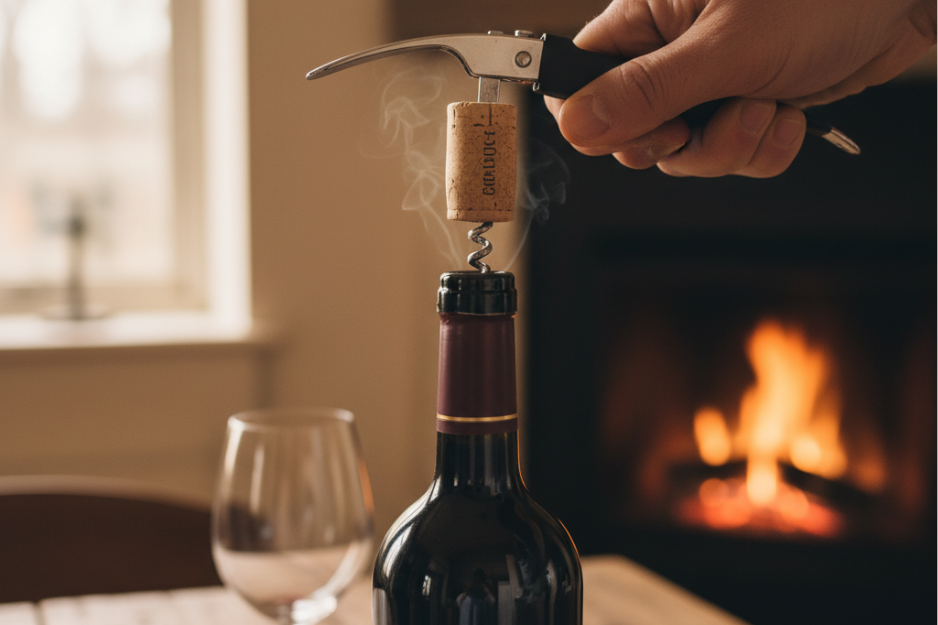
Opening a bottle of wine should feel smooth and satisfying, yet many people have experienced the moment when a cork snaps or crumbles just as the bottle is about to be enjoyed. It often happens when guests are waiting, dinner is ready, or you finally reach for a bottle you have been saving. A broken cork interrupts the ritual, affects the aroma, introduces unwanted debris, and makes you wonder whether the wine is still in good condition. It also highlights how much your experience depends on the quality of your wine accessories, especially the tools you use to open the bottle.
Corks break because they become dry, fragile, or unevenly stressed, and the right corkscrew prevents this by gripping and lifting the cork in a controlled, protective motion. Understanding what leads to cork failure gives you more confidence every time you open a bottle. When you know how corks age, how storage affects them, and how different extraction tools and wine accessories manage pressure, you can prevent breakage before it begins.
Key Takeaways:
- Corks usually break because they become dry, fragile, or unevenly stressed, often due to age, improper storage, or inconsistent temperatures.
- Storing wine bottles on their side with stable humidity and temperature helps keep the cork moist, elastic, and less likely to crumble.
- Using the right corkscrew protects the cork during extraction. Tools such as a double-hinged waiter’s friend, an Ah-So, or a Durand offer controlled, gentle lifting.
- When a cork begins to break, slowing down and switching to a side-entry tool like an Ah-So can help remove the remaining pieces cleanly.
- High-quality wine accessories make a noticeable difference, ensuring that opening any bottle feels smooth, predictable, and enjoyable.
What a Wine Cork Actually Does and Why It Matters
A cork is much more than a simple bottle closure. It plays an active role in how a wine matures, preserves its character, and stays drinkable over time. When the cork is healthy, the wine ages gracefully. When it is compromised, both flavor and aroma can suffer.
The true purpose of a cork
A cork controls how much oxygen reaches the wine. Only a tiny amount of oxygen should enter the bottle, just enough to help the wine evolve without spoiling. This balance is possible only when the cork stays elastic, tightly sealed, and structurally sound.
Natural and synthetic corks
Natural corks are made from cork oak bark and contain millions of microscopic air cells that allow gentle, controlled oxygen transfer. Synthetic corks behave differently. They stay consistent and are less likely to dry out, but they do not support the same slow micro-oxygenation that benefits wines designed to age.
Cork elasticity and moisture retention
A healthy cork feels flexible and springy. When it remains in contact with the wine, it absorbs enough moisture to stay supple. If the cork dries out, it begins to shrink and lose elasticity, which makes it far more likely to crack, crumble, or break during extraction.
Signs a cork may be compromised
Before opening a bottle, check the cork for early warnings such as:
- A cork that appears slightly sunken or lower than usual
- Dryness or flaking around the top
- Small cracks around the rim
- Any traces of leakage or staining
These signs do not always mean the wine is spoiled, but they do mean the cork is more fragile. Choosing the right corkscrew and using careful extraction becomes even more important.
What Really Causes Wine Corks to Break When You Open a Bottle
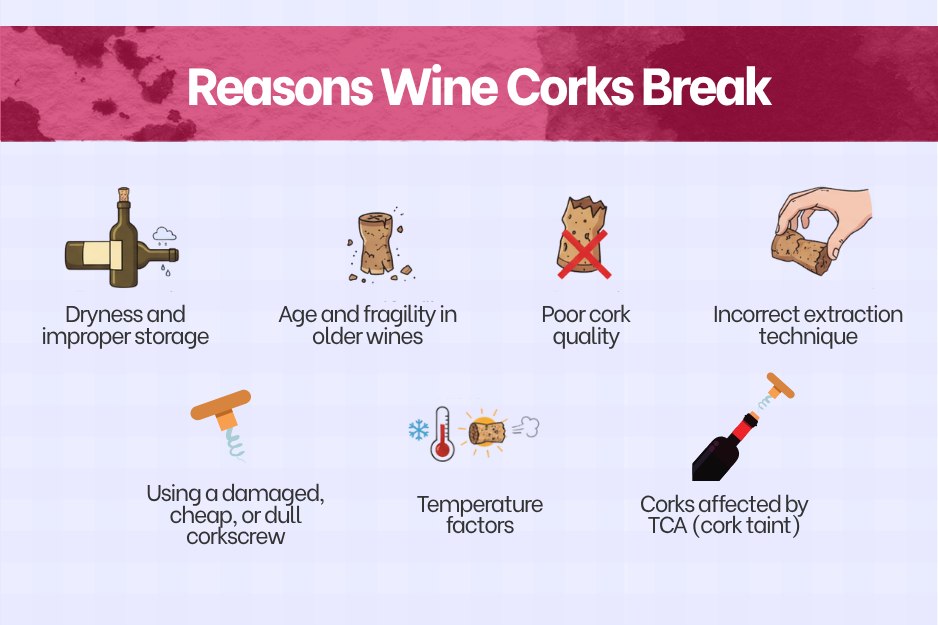
Understanding why corks fail gives you the ability to prevent problems before they happen. Several factors work together to weaken a cork, and recognizing them helps you choose the right tools and techniques every time you open a bottle.
Dryness and improper storage
Dryness is the most common cause of cork failure. When bottles sit upright for long periods, the cork no longer touches the wine. As moisture evaporates, the cork shrinks, loses elasticity, and becomes brittle. Storing bottles on their side keeps the cork hydrated and prevents shrinkage. Humidity also plays a role, which is why wine cellars maintain an environment of about sixty to seventy percent humidity.
Age and fragility in older wines
Time naturally breaks down cork structure. After many years, even perfectly stored corks begin to soften, crumble, or lose their springiness. Older bottles require gentler handling because their corks are far more sensitive to pressure.
Poor cork quality
Not all corks have the same density or structural strength. Lower-grade corks may contain weak spots, gaps, or inconsistent texture. These imperfections make the cork more likely to tear or split during extraction.
Incorrect extraction technique
A large number of broken corks are caused by improper technique. Common mistakes include inserting the worm off center, failing to screw it in deeply enough, pulling too quickly, or twisting with too much force. These actions apply uneven pressure and cause the cork to tear instead of lifting smoothly.
Using a damaged, cheap, or dull corkscrew
When the worm is bent or dull, it cuts or shreds the cork instead of gliding into it. Low-quality corkscrews often use rough metal that increases friction and places unnecessary strain on the cork.
Temperature factors
Corks respond differently depending on temperature. A cold cork tightens and becomes rigid, making it more prone to cracking. A warm cork softens and loses shape. Both extremes make extraction more difficult and increase the risk of breakage.
Corks affected by TCA (cork taint)
Corks contaminated with TCA sometimes feel crumbly or unusually weak. Even if the wine itself is still safe to drink, the cork often loses integrity and breaks easily during removal.
How the Right Corkscrew Prevents Breakage
The secret to extracting a cork cleanly isn’t strength—it’s controlled, even pressure. Modern corkscrews are designed to protect the cork by minimizing stress and improving stability.
Tools with the right worm shape, leverage system, and extraction angle can mean the difference between a flawless pull and a cork in pieces.
How to Handle a Cork That’s Already Breaking or Crumbling
Even with good technique, some corks begin to break as soon as you start pulling. When that happens, slow down and shift to a gentler strategy so you can save both the bottle and the wine.
If the worm slips
Gently remove the corkscrew and reposition it slightly off center, then reinsert with steady, even pressure. A small angle adjustment often helps the worm find a stronger part of the cork.
If half the cork comes out
Switch to an Ah-So opener and slide the prongs down the sides of the remaining piece. The prongs grip the outside of the cork, allowing you to pull it out without drilling into the fragile center.
If the cork is crumbling
Work the Ah-So slowly around the edges where the cork is still firm. Moving gradually helps the prongs lift the cork in one piece instead of breaking it further.
If the cork will not come out at all
When extraction is no longer possible, the best option is to push the cork into the bottle with gentle pressure. Pour the wine through a fine mesh strainer or a coffee filter to catch any pieces and preserve the wine’s clarity.
Preventing Cork Breakage Before It Happens
Most cork problems can be avoided long before you pick up a corkscrew. With the right storage habits, the proper handling of older bottles, and well-maintained wine tools, you dramatically lower the risk of a cork tearing or crumbling.
Proper storage methods
The way you store wine has a direct impact on cork health. Keeping bottles on their side allows the wine to stay in contact with the cork, which prevents drying and shrinkage. Humidity also plays an important role. A cellar or storage space with roughly sixty to seventy percent humidity keeps the cork supple and less prone to cracking. Temperature matters too. Wine should rest in a cool, stable environment without frequent fluctuations that stress both the cork and the liquid inside.
Caring for older wines
Mature bottles need a bit of preparation before opening. Allow them to stand upright for a few hours so sediment can settle at the bottom. Avoid shaking or moving them more than necessary, since any disturbance can weaken an already delicate cork. When it is time to open the bottle, choose the appropriate extraction tool. Older wines respond best to gentle, steady pressure rather than the forceful pull used for younger corks.
Higher-quality corks for cellaring
For collectors and winemakers, cork quality is a long-term investment. Dense, uniform corks maintain their structure for many years and are far less likely to fail during extraction. Selecting high-grade corks greatly improves the aging potential of wines stored for long periods.
Maintaining your corkscrew
Your tools matter just as much as the bottle itself. A clean, sharp worm glides into the cork with minimal friction and reduces the likelihood of tearing. Regularly inspect your corkscrew for bent metal, dull tips, or stiffness in the hinge. Lower-quality openers often rely on excess force, so choosing a durable, well-designed corkscrew protects both the cork and the wine.
How Winemakers Are Solving Cork Breakage Today
Modern wineries are taking cork performance seriously, and their innovations are dramatically reducing breakage. Advances in cork production and alternative closures give winemakers more control over long-term bottle integrity and create a more consistent experience for consumers.
One improvement is the use of more consistent, high-grade natural corks. These corks are carefully sorted and processed to ensure uniform density and elasticity, which helps them maintain their structure throughout years of aging. Technical corks, which are engineered from high-quality cork granules, also offer greater reliability. They are designed to resist crumbling and reduce the risk of weak spots that lead to tearing during extraction.
Another advancement is the rise of micro-agglomerated corks. These corks are created from fine cork particles that are bonded together under controlled conditions. The result is a closure that maintains the feel of natural cork but performs with far greater consistency and strength.
Wineries are also turning to screw caps for wines intended for early consumption. Screw caps eliminate cork-related failures entirely and ensure that every bottle opens cleanly. They have become especially popular for fresh, aromatic wines that do not require long-term aging.
Together, these innovations protect wine quality, reduce the number of broken corks, and create a smoother, more predictable experience for anyone opening a bottle.
Frequently Asked Questions
1. Why do wine corks dry out?
Corks dry out when they lose consistent exposure to moisture, either from the wine inside the bottle or from the surrounding environment. Natural cork is made of plant fibers that expand and contract, and when the humidity around them drops too low, the cork begins to shrink. Over time, this shrinkage reduces elasticity, weakens the internal structure, and increases the risk of cracking or crumbling when a corkscrew applies pressure. Long-term storage in warm, dry conditions accelerates this process, which is why bottles kept upright for extended periods often have brittle corks.
2. Should wine be stored upright or sideways?
For long-term cellaring, storing wine on its side is the preferred method because the liquid remains in contact with the cork. This gentle, constant moisture keeps the cork expanded and helps maintain an airtight seal. Without this contact, the cork gradually dries, contracts, and allows small amounts of oxygen to enter the bottle, potentially altering the wine’s flavor profile. Sideways storage also contributes to stable aging conditions, especially in cellars where temperature and humidity are controlled for preservation.
3. What corkscrew is best for old wine?
A twin-prong opener, also known as an Ah-So, or a Durand are widely considered the best tools for older bottles with delicate corks. As corks age, they lose their structural integrity, making a traditional worm-style corkscrew more likely to tear through the center. The Ah-So and the Durand avoid this by sliding prongs between the cork and the bottle neck, allowing the opener to gently grip and lift the cork as a whole. This method minimizes stress on the cork’s interior and helps preserve fragile, decades-old closures that would otherwise shred under standard extraction.
4. How do I remove a stuck cork?
When a cork is stuck, switching to an Ah-So usually provides a safer, more controlled removal. Start by wiggling the shorter prong between the cork and the glass. Then insert the longer prong and work the opener downward, alternating slight side-to-side pressure until the prongs fully surround the cork. Once secure, twist and pull upward in small increments. This technique grips the cork from the outside instead of relying on a worm, giving you more leverage and reducing the chance of pushing the cork inward or breaking it into pieces.
5. Why does a cork break even with a good corkscrew?
Even when you use a reliable corkscrew and proper technique, a cork can still break if it has deteriorated over time. Natural cork is an organic material, and factors like age, dryness, heat exposure, and inconsistent storage conditions weaken its internal structure. A compromised cork may appear solid on the surface yet crumble under even minimal pressure. Sometimes microscopic cracks or oxidized sections inside the cork give it very little cohesion, so the corkscrew pulls up one layer while the rest remains lodged in the neck. In these cases, the failure lies with the cork, not the tool.
6. Are synthetic corks less likely to break?
Yes. Synthetic corks tend to be far more resilient because they are made from stable, moisture-independent materials. Unlike natural cork, they do not expand and contract based on humidity and are not vulnerable to drying, cracking, or long-term structural decay. This makes them easier to extract cleanly and more predictable for casual drinkers who open bottles occasionally. While they lack some of the traditional charm of natural cork, synthetics provide a consistent seal and a lower risk of breakage, especially in wines meant to be enjoyed young.
Opening Wine Should Feel Smooth and Predictable
With the right information and the right tools, you can open any bottle with confidence. When you understand how corks behave, why they weaken, and which corkscrews are designed to protect them, you remove the uncertainty that often leads to breakage. Whether you are opening a bottle for a relaxed evening or preparing a treasured vintage for a special celebration, the moment should feel smooth, clean, and completely stress free.At Wine-n-Gear, we offer a curated range of wine accessories that elevate every step of the experience. Our collection includes premium corkscrews, elegant wine stoppers, precision aerators, wine glasses, and beautifully crafted sabers for ceremonial openings. Each piece is designed to help you enjoy your wine effortlessly and with a sense of occasion.