Jigger vs Free Pouring: Which Method Is Best for Accuracy, Speed, and Cocktail Quality
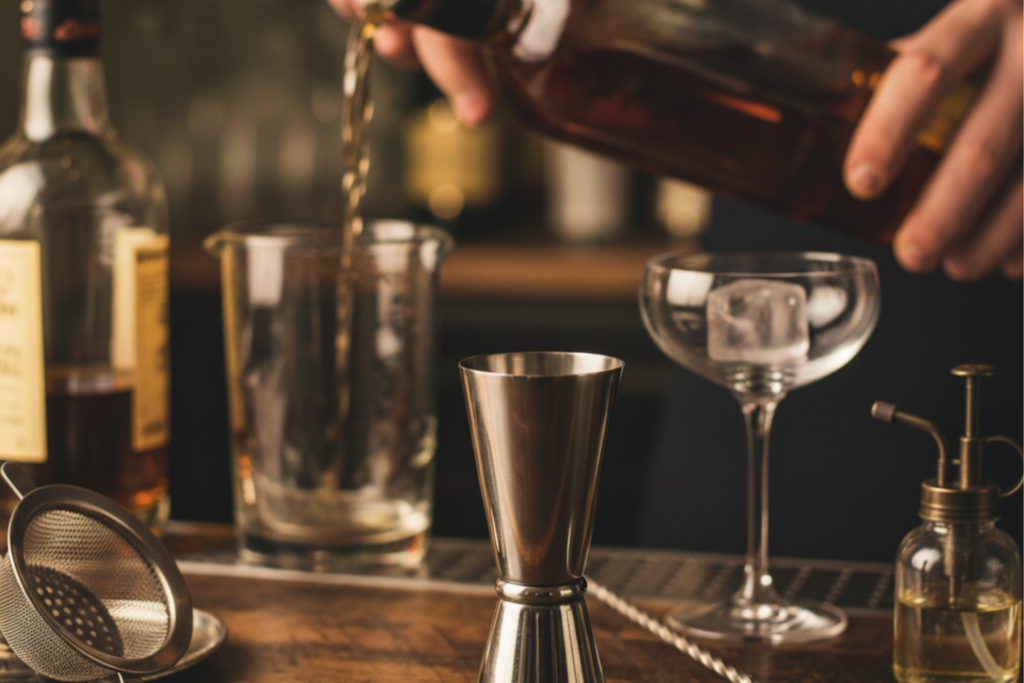
Jiggering is the best method for accuracy and cocktail quality, while free pouring is the fastest method for high-volume service.
Cocktail measurement influences far more than alcohol volume. It determines how consistently a drink expresses its intended flavor profile, how efficiently a bar controls pour cost, and how safely staff can serve guests during busy shifts. Every fraction of an ounce changes how a cocktail tastes, dilutes, and presents, making the choice between jiggering and free pouring a key operational decision for both home bartenders and professionals.
Understanding the strengths and limitations of each method helps define the type of experience a bar delivers. Some environments prioritize precision and recipe integrity, while others require speed, fluid motion, and the ability to produce multiple drinks simultaneously. By comparing accuracy, workflow efficiency, and overall drink quality, it becomes clear when jiggering matters most and when free pouring becomes the practical choice.
Key Takeaways
- Jiggering delivers near-perfect measurement accuracy, protects inventory, and ensures drink consistency across staff, locations, and shifts.
- Free pouring dramatically speeds up service but introduces variability that affects flavor balance, costs, and responsible service obligations.
- Complex cocktails benefit most from jigger precision, while simple highballs can be free poured with minimal sensory impact.
- The method a bar chooses affects labor training time, guest experience, legal compliance, and monthly profitability.
- Most modern programs use a hybrid system: jigger for spirits and free pour for mixers to maximize consistency and speed.
Understanding the Fundamentals of Drink Measurement
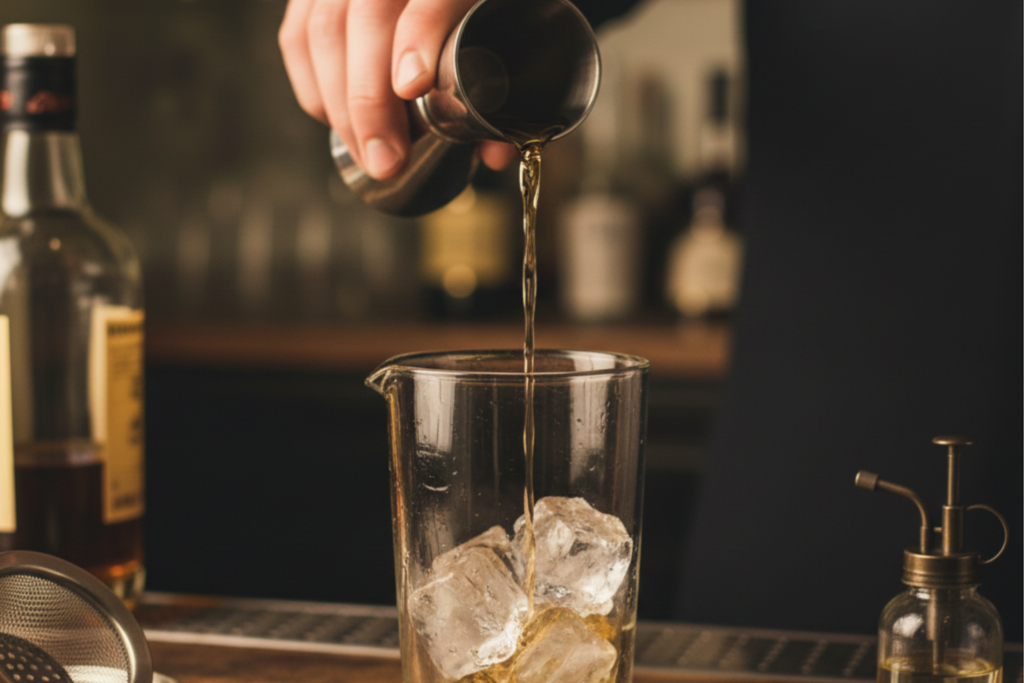
Crafting cocktails involves precise chemical and sensory interactions. Spirits contain volatile aromatic compounds, sugars, congeners, and ethanol. Each component interacts differently with acidity, dilution, and temperature. When measurements drift, the entire structure of a drink shifts.
The Chemistry Behind Cocktail Balance
A cocktail is a calibrated equation involving:
- Ethanol concentration – The alcohol level influences aroma release, sweetness perception, and mouthfeel. Higher ethanol amplifies aromatic intensity but can overpower delicate flavors when measurements drift.
- Sugar levels – Sugars balance acidity, soften sharp edges, and contribute to body. Even a small increase or decrease changes texture, viscosity, and perceived roundness on the palate.
- Acid strength (citric, malic, tartaric acids) – Acids brighten flavors, provide structure, and influence how sweetness is perceived. Precise ratios ensure the drink feels balanced rather than sharp, flat, or overly punchy.
- Bitterness molecules – Bitters, amaros, and botanical compounds provide contrast and depth. Too much shifts the drink toward harshness, while too little removes complexity.
- Aromatic volatility – Spirit esters, citrus oils, and herbal compounds change dramatically with dilution and ABV. These determine the immediate sensory impact when the drink is lifted to the nose.
- Dilution percentage – Shaking or stirring introduces water that integrates ingredients and controls texture. Inaccurate pours disrupt proper dilution, making drinks either overly harsh or overly watered down.
For example:
- Increasing ethanol suppresses perceived sweetness.
- Increasing acidity brightens flavor but can overpower delicate notes.
- Over-dilution dulls aroma and texture.
A small 0.25 oz overpour of spirit can increase ABV by 6 to 12 percent depending on drink size, dramatically altering structure.
Standard Pour Sizes Across Regions
Different markets define standard pours differently:
- United States: 1.5 oz standard shot
- United Kingdom: 25 ml and 50 ml measures
- European Union: 20 to 40 ml norms depending on country
- Australia/New Zealand: 30 ml standard pour
These variations influence training standards, recipe development, and licensing expectations.
Breakfast bars, lounges, clubs, and cocktail tasting menus must account for regional differences when creating consistent recipes.
What Is Jiggering and Why It Matters
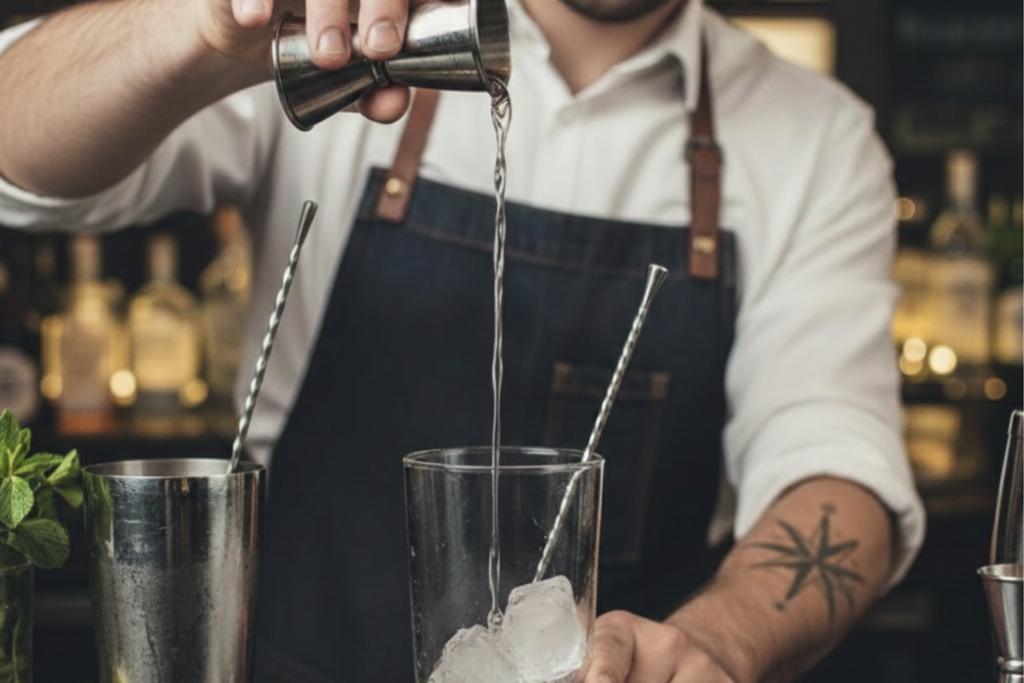
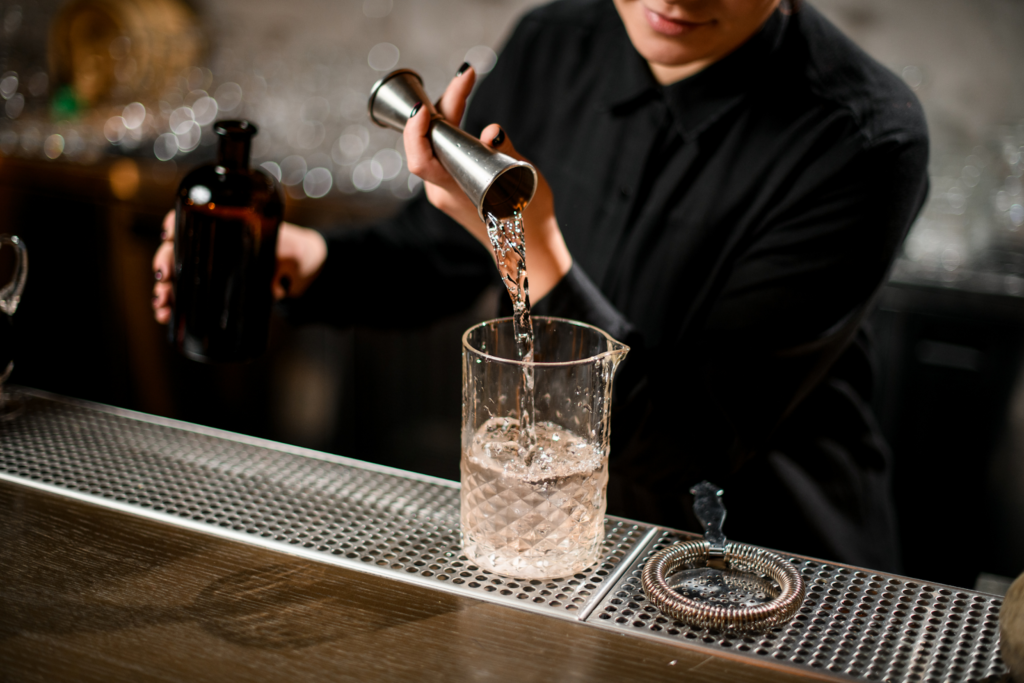
Jiggering is the practice of using a calibrated measuring tool to portion liquids accurately. It remains the global standard in craft mixology because it eliminates guesswork and ensures that every drink reflects its intended formula.
Types of Jiggers and Measurement Increments
Common jigger styles include:
- Japanese jigger: Tall and narrow with precise lines
- Bell jigger: Wider shape with ergonomic grip
- Hourglass double jigger: Dual-sided, typically 1 oz and 2 oz
Most jiggers feature internal markers at increments like:
- 0.25 oz
- 0.5 oz
- 0.75 oz
- 1 oz
- 1.5 oz
- 2 oz
These units serve as standardized benchmarks for recipes, cost calculations, and training programs.
Why Jiggers Produce the Most Accurate Drinks
Jiggers maintain accuracy because:
- They do not change with liquid temperature
- They do not vary with flow rate
- They are immune to viscosity differences
- They prevent overpouring from bottle weight
- They reduce cognitive load during service
This stable measurement system creates consistency across bartenders, shifts, and locations.
Where Jiggering Is Non-Negotiable
You will see mandatory jigger use in:
- Craft cocktail bars
- High-end lounges and hotel bars
- Beverage programs following IBA and WSET standards
- Venues serving premium spirits
- Bars where cost control determines profitability
- Training institutions and competitions
Many bars even require jiggering for staff evaluations and recipe sign-offs.
What Is Free Pouring and Why It Became Popular
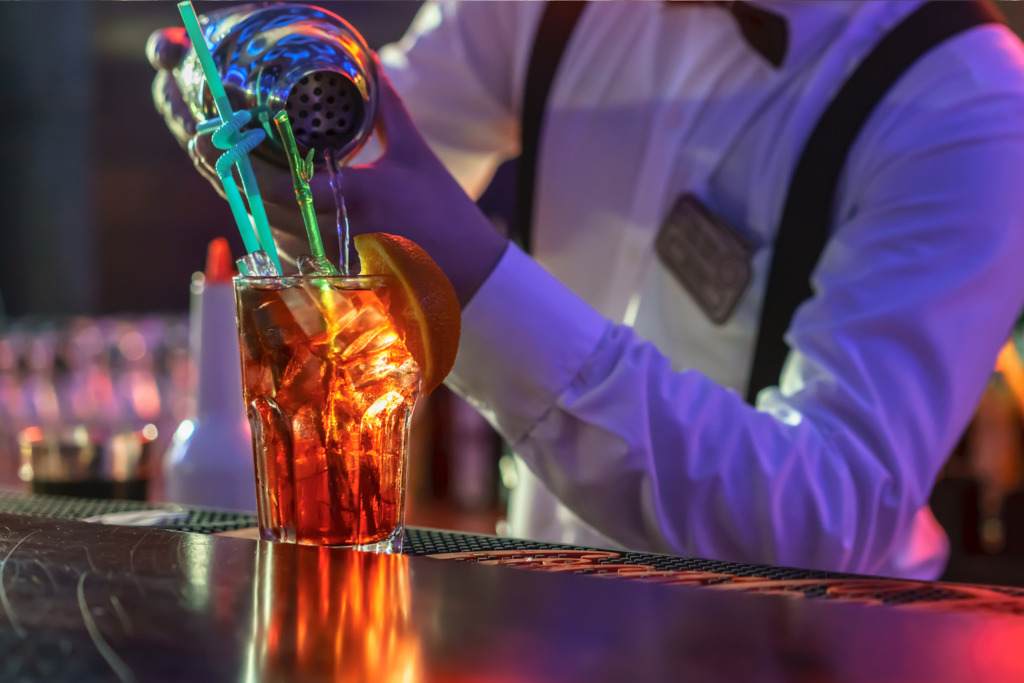
Free pouring refers to counting rhythmically while pouring directly from a bottle. It developed in high-volume bar environments where speed was essential and multitasking across multiple drinks became a core part of a bartender’s workflow.
How Free Pour Counting Works
Using a standard pour spout, a bartender counts beats:
- A four-count equals approximately 1.5 oz
- A two-count equals approximately 0.75 oz
However, several variables affect flow rate:
- Bottle fullness
- Temperature of liquid
- Viscosity (e.g., Baileys vs gin)
- Pour spout design
- Wrist angle and height
- Bartender fatigue
The human component introduces more variation than any measuring tool.
The Advantages of Free Pouring
Free pouring offers undeniable practical benefits:
- Faster service output
- Ability to build multiple drinks at once
- Improved guest engagement through flair and showmanship
- Reduced bottlenecks in high-volume environments
- Lower reliance on tools during peak service
In busy environments, speed often outweighs the precision provided by jiggers.
The Risks and Variability
Free pouring requires substantial training to master. Without discipline, accuracy can shift dramatically.
Studies on pour accuracy show:
- Untrained bartenders vary by 0.5 oz or more per pour
- Moderately trained bartenders still vary by 0.25 oz
- Only experienced free pour bartenders achieve near-consistent results
This affects guest experience and bar profitability. Over time, variability becomes costly.
Accuracy Breakdown: Jigger vs Free Pour
Measured Variance Differences
When tested scientifically:
- Jiggering accuracy variance is around 0.05 oz or less
- Free pouring accuracy, even when trained, varies around 0.25 oz
- Under stress or fatigue, free pouring variance increases further
How Accuracy Affects Flavor
When a drink’s core ratio shifts, so does its flavor structure.
Too much spirit results in:
- Higher perceived bitterness
- Lower perceived sweetness
- Stronger ethanol burn
- Flattened acidity
- Overpowering aroma
Too little spirit results in:
- Weaker body
- Lower texture
- Higher perceived acidity
- Over-dilution
Cocktails rely on harmony. Ratio errors break that harmony quickly.
Impact on Dilution and Texture
Stirred cocktails rely heavily on dilution to achieve smooth texture and integrated flavor. Free pouring affects spirit-to-water ratios, producing harsher or weaker drinks compared to jiggered builds.
Speed and Operational Efficiency
Speed determines service flow, guest wait times, and a bar’s ability to handle peak hours. This is where free pouring excels.
Time Differences Between Methods
On average:
- Measuring with a jigger adds 1–2 seconds per pour
- Free pouring completes pours almost instantly
During rushes, those seconds accumulate into significant throughput differences.
Free Pouring in High-Volume Service
Nightclubs and sports bars operate with:
- High order volume
- Long lines
- Loud environments
- Fast-paced workflows
- Multitasking rounds of shots and mixed drinks
In these settings, free pouring reduces bottlenecks and maximizes revenue per hour.
Jiggering in Craft Service
Craft bartenders prefer control and consistency. Jiggering allows:
- Slow, mindful builds
- Reproducible recipes
- Alignment with brand quality standards
- Predictable costs
- Professional presentation
Craft bars value accuracy more than raw speed.
Cost, Inventory, and Profitability Implications
Pour cost represents one of the largest expense categories for bars. Even small measurement errors drastically shift financial outcomes.
The Math Behind a 0.25 oz Overpour
Assume:
- A cocktail calls for 1.5 oz of spirit
- Each ounce costs the bar approximately 80 cents
- The bartender overpours 0.25 oz per drink
Over 200 drinks per shift:
- 0.25 oz × 200 drinks = 50 oz lost
- 50 oz is more than 1.5 bottles of spirit
- Over a month, this equals more than 45 bottles lost
- On premium spirits, this is hundreds or thousands of dollars
Jiggers control these losses.
Underpouring and Brand Trust
Guests notice when a drink tastes weak. Underpouring, even if unintentional, damages reputation, reduces return visits, and leads to poor reviews.
Training Cost Comparison
Jigger training:
- Takes minutes
- Provides immediate accuracy
- Ensures consistency across new hires
Free pour training:
- Requires daily drills
- Needs constant recalibration
- Takes weeks or months to master
- Has higher variation across staff
Bars with high turnover often choose jiggering for this reason.
Safety, Compliance, and Responsible Service
Alcohol service is regulated. Measurement directly affects regulatory compliance.
Overserving Risks
Overserving increases:
- Guest intoxication
- Liability exposure
- Risk of injury
- Venue penalties
- Staff disciplinary consequences
These risks grow when bartenders rely solely on free pouring.
Legal Requirements in Some Countries
Certain regions require measured pours:
- United Kingdom
- Scotland
- Northern Ireland
- Certain Canadian provinces
Bars in these locations must use jiggers or automated pour systems.
Cocktails That Require Precision vs Cocktails That Don’t
Precision-Dependent Cocktails
These require exact ratios to taste correct:
- Daiquiri
- Whiskey Sour
- Margarita
- Negroni
- Martini
- Manhattan
- Ramos Gin Fizz
- Tiki cocktails with layered ingredients
- Flavored liqueur cocktails
- Low-ABV cocktails where shifts are noticeable
These drinks rely on precise balance between acid, sugar, and spirit.
Cocktails That Tolerate Free Pouring
These can handle small variances without losing structure:
- Gin and Tonic
- Rum and Coke
- Vodka Soda
- Tequila Sunrise
- Most highballs
- Shots
Their simplicity makes them forgiving.
What Professional Bartenders Actually Use
Craft and Mixology Bars
These venues typically enforce:
- Jigger-only builds
- Strict recipe adherence
- Consistent brand standards
Guests come for balanced drinks, not speed.
Nightclubs and High-Volume Bars
Bartenders in these environments often work with:
- Free pour systems
- Fast-paced ordering
- Simultaneous builds
They prioritize speed over perfect ratio precision.
Hybrid Method (Most Common Today)
Many bars combine both:
- Jigger for spirits
- Free pour for juices, sodas, and mixers
This creates the best balance between speed and accuracy.
Choosing the Right Method for Your Bar or Home
For Home Bartenders
Jiggers are ideal because:
- They eliminate guesswork
- They help newcomers learn recipes
- They produce more consistent drinks
- Guests appreciate balanced cocktails
For Professional Bars
The right method depends on:
- Venue volume
- Concept
- Staff experience
- Inventory goals
- Guest expectations
Craft bars benefit from jigger precision. High-volume bars benefit from free pouring.
For Hospitality Groups
Large hospitality brands use standardized measurement systems across locations to maintain consistency, cost control, and replicable service.
Training Tips for Both Methods
Mastering Jiggering
Effective technique includes:
- Holding the jigger between index finger and middle finger
- Maintaining horizontal alignment
- Pouring smoothly to avoid spillage
- Using a consistent rhythm
- Filling to the rim rather than under-pouring
Training for Free Pour Accuracy
Bartenders practice with water by:
- Performing timed counts
- Using measuring cups to check accuracy
- Testing flow with different bottle fullness levels
- Calibrating pour spouts weekly
- Adjusting wrist height for smoother flow
Maintaining Team Consistency
Bars can strengthen training with:
- Standard operating procedures
- Monthly accuracy tests
- Recipe cards and visual guides
- Inventory software to flag anomalies
Frequently Asked Questions
Do professional bartenders use jiggers or free pour?
Professional bartenders use both methods depending on the bar’s style and service needs. Craft cocktail bars typically rely on jiggers because precision is essential for recipe accuracy and flavor consistency. High-volume bars and nightclubs often use free pouring to prioritize speed and maintain fast service flow.
Is free pouring accurate?
Free pouring can be accurate, but only when a bartender is trained and regularly calibrated. Even skilled bartenders usually have more variance than those using jiggers, often around 0.25 oz per pour. Without consistent practice, accuracy drops quickly due to changes in bottle fullness, spout type, and counting rhythm.
Why do craft bars prefer jiggers?
Craft bars prefer jiggers because they guarantee precise measurements that preserve the cocktail’s intended balance. Consistency across staff is essential for maintaining brand standards, especially when using premium or complex ingredients. Jiggers also help control costs and reduce waste, which supports profitability.
Is free pouring legal everywhere?
No, free pouring is not legal everywhere. Some countries and regions, such as the United Kingdom, Scotland, and certain Canadian provinces, require measured pours by law to ensure responsible service. Bars in these areas must use jiggers or certified measuring devices to comply with regulations.
How long does it take to master free pouring?
Most bartenders need about two to four weeks of daily practice to develop basic free-pour accuracy. Achieving near-jigger precision usually takes longer because it requires muscle memory, consistent counting, and regular calibration. Without ongoing practice, free-pour accuracy tends to decline quickly.
Can you use both methods together?
Yes, many bars use a hybrid method to balance consistency and speed. Spirits are typically measured with jiggers for accuracy, while mixers and non-alcoholic components are free poured for efficiency. This approach allows bartenders to maintain drink quality without slowing down service.
What is the four-count pour?
A four-count pour is a timed free pour that equals about 1.5 oz when using a standard speed spout. Bartenders count “one, two, three, four” at a steady rhythm, which produces a typical single shot. The exact volume can vary based on counting speed, bottle angle, and spout type, so regular calibration is necessary.
Making the Best Measurement Choice
Measurement is one of the most important decisions in bartending. Jiggering provides unparalleled precision, ensures consistent flavor, protects inventory, and aligns with responsible service guidelines. Free pouring offers unmatched speed and showmanship for high-volume environments but requires rigorous training to control variance. The right method depends on context: craft bars rely on precision, nightclubs prioritize speed, and home bartenders typically benefit most from jigger reliability. Across every setting, the goal remains the same: accurate pours, balanced cocktails, and exceptional guest experiences.At wine-n-gear, we have collections of bar tools and drinkware designed to support businesses, restaurants, and home bartenders. We offer curated sets of jiggers, shakers, wine glasses, corkscrews, and other accessories to help you craft consistent, high-quality drinks with confidence.