Mixing Glass vs Shaker: When to Stir and When to Shake
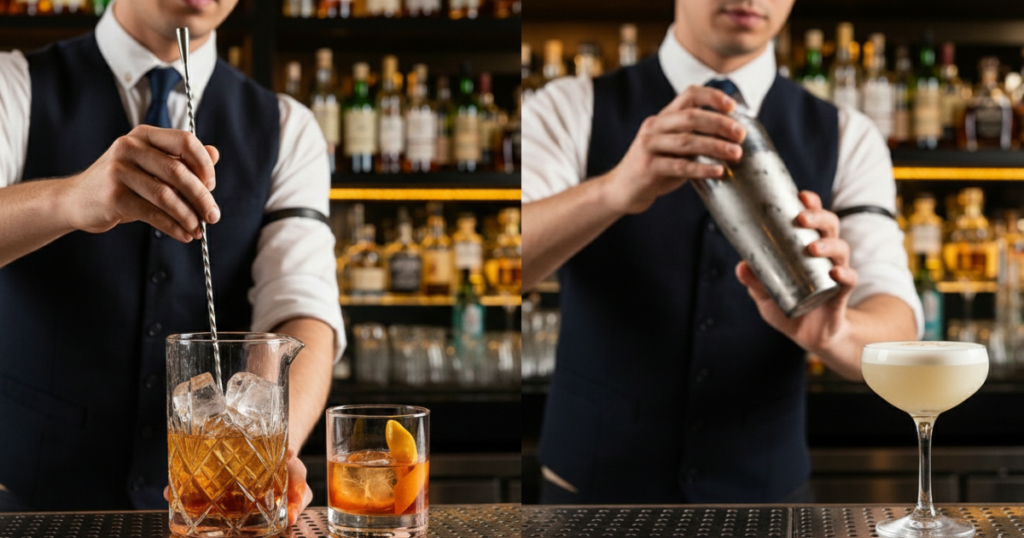
Use a cocktail shaker for drinks with juice, dairy, eggs, or syrups to aerate and fully combine opaque ingredients. Use a mixing glass to stir spirit-only cocktails with clear modifiers to preserve clarity, texture, and controlled dilution. Shake cloudy cocktails and stir clear cocktails.
This distinction matters because shaking and stirring do fundamentally different jobs behind the bar. Shaking introduces air, chills aggressively, and drives faster dilution, which softens acidity and helps disparate ingredients taste unified. Stirring, on the other hand, prioritizes restraint, allowing spirits to stay clear, layered, and texturally smooth without masking their character.
Key Takeaways
- Shake opaque cocktails with juice, dairy, eggs, or syrups to chill fast and emulsify ingredients.
- Stir clear, spirit-forward cocktails to keep them crystal clear and silky with controlled dilution.
- Shaking adds air and texture; stirring preserves structure and nuance.
- Never shake carbonation; add soda, tonic, or sparkling wine after mixing.
- Clarity is the decision trigger: cloudy equals shake, clear equals stir.
Why Mixing Method Matters More Than Most People Realize
Choosing between a mixing glass and a shaker is not tradition for tradition’s sake. The method determines how cold the drink gets, how much water it absorbs, how the aromas present, and how the texture feels on the palate. Two identical ingredient lists can taste dramatically different depending on whether they were shaken or stirred.
Temperature Control and Ice Interaction
Shaking creates aggressive contact between ice and liquid. That friction chills faster and extracts water quickly. Stirring, by contrast, uses gentle movement around large ice, lowering temperature steadily without shocking the drink.
Dilution Rates and Alcohol Balance
Dilution is not a flaw; it is a feature. Water opens aromas and balances alcohol. Shaking typically yields higher dilution in a shorter time, which is ideal for sharp citrus and sugar. Stirring produces slower, more predictable dilution that keeps spirits expressive.
Texture, Mouthfeel, and Aeration
Shaking introduces air. That air lifts aromas and creates foam when proteins are present. Stirring minimizes air, producing a dense, silky mouthfeel prized in spirit-forward cocktails.
Visual Clarity and Presentation Standards
Clarity signals precision. Stirred drinks should look jewel-clear. Shaken drinks can be intentionally cloudy or frothy. Mixing the methods muddles both outcomes.
What Is a Mixing Glass
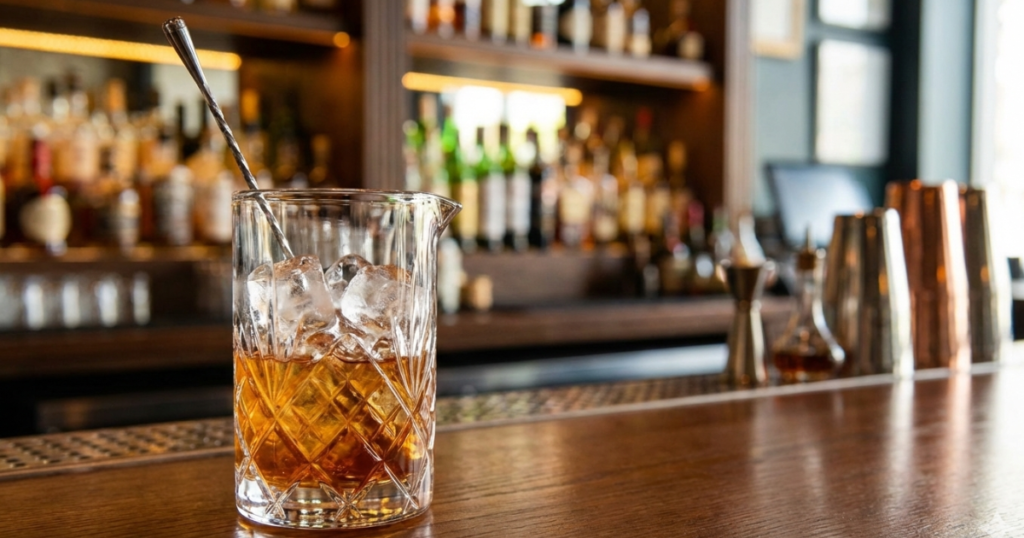
A mixing glass is a heavy vessel designed specifically for stirring cocktails over ice. It allows bartenders to control temperature and dilution with precision rather than speed. The goal is to chill and integrate ingredients without adding air or disrupting clarity.
How Stirring Changes a Cocktail
Stirring gently chills a cocktail while keeping all ingredients aligned and cohesive. Spirits remain transparent, aromatics stay focused, and the structure of the drink stays intact. The result is a smooth, silky finish rather than a light or frothy texture.
Ideal Ice Types for Stirring
Large, cold, and dense ice is essential for proper stirring. Big cubes or spears melt slowly, giving you time to reach ideal dilution without flooding the drink with water. Poor-quality or cracked ice melts too fast and undermines control.
Common Mixing Glass Designs and Materials
Thick crystal or tempered glass is preferred because it retains cold and resists thermal shock. The weight adds stability while stirring and reduces accidental tipping. Some bars use metal beakers, but glass provides visual feedback that helps fine-tune dilution.
When to Use a Mixing Glass (Stirred Cocktails)
Spirit-Forward Cocktails Explained
Spirit-forward cocktails are built primarily on a base spirit with clear modifiers such as vermouth, fortified wine, bitters, or clear liqueurs. These drinks are designed to highlight the aroma, texture, and structure of the alcohol itself. Because there are no opaque ingredients to integrate, stirring is almost always the correct technique.
Why Clarity Equals Quality in These Drinks
In spirit-forward cocktails, visual clarity signals balance and precision. Excess air or uncontrolled dilution dulls nuance and flattens aromatics. Stirring keeps flavors clean, layered, and intentionally structured.
Classic Examples of Stirred Cocktails
Martini, Manhattan, Negroni, Old Fashioned, and Sazerac are classic examples of stirred cocktails. Each relies on transparency, measured dilution, and a smooth mouthfeel rather than aeration. Stirring preserves their polished finish and spirit-driven character.
What Is a Cocktail Shaker
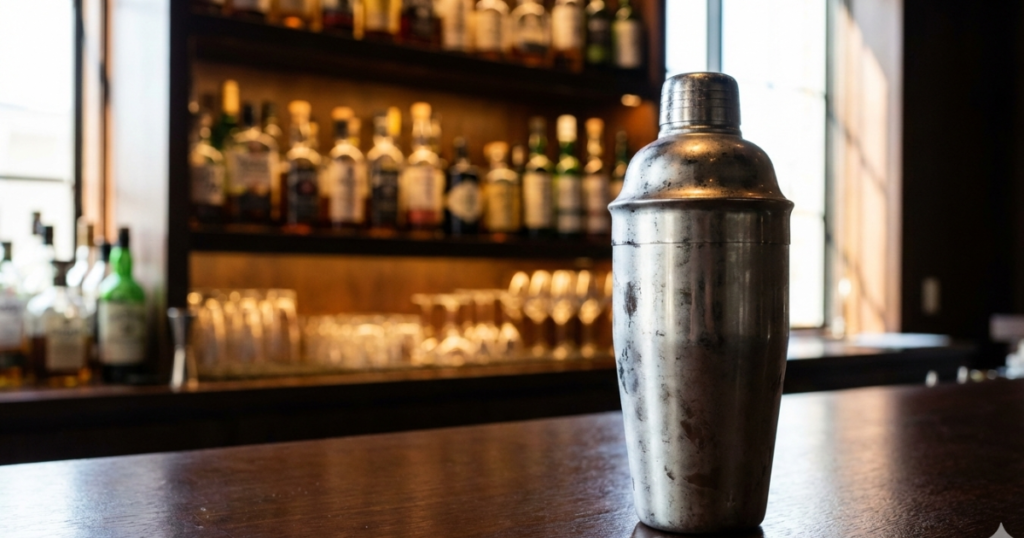
A shaker is a sealed vessel used to vigorously mix ingredients with ice. Its primary purpose is speed, aeration, and emulsification during cocktail preparation. This aggressive action helps quickly chill drinks while forcing ingredients to combine evenly.
How Shaking Changes Flavor and Texture
Shaking chills cocktails rapidly and integrates ingredients that naturally resist blending. Citrus oils disperse more evenly, sugars dissolve fully, and sharp flavors soften. The result is a brighter, more unified drink with a lighter mouthfeel.
Aeration, Emulsification, and Foam Creation
Air is a deliberate feature of shaking, not a flaw. With egg whites or aquafaba, shaking builds a stable, creamy foam that adds body and visual appeal. In juice-based cocktails, aeration lifts brightness and rounds out acidity for better balance.
Types of Cocktail Shakers and How They Differ
Boston Shaker
The Boston shaker is a two-piece design made with a metal tin paired with either a glass or a second metal tin. It creates a strong seal, handles large volumes, and chills cocktails quickly. For these reasons, it is the preferred choice in most professional bars.
Cobbler Shaker
The cobbler shaker features a three-piece design with a built-in strainer and cap. It is easy to use and intuitive for beginners at home. However, it chills more slowly and is more prone to sticking during service.
French or Parisian Shaker
The French or Parisian shaker is a sleek two-piece metal shaker without a glass component. It offers better balance and aesthetics than a cobbler shaker while remaining simpler than a Boston setup. This style is often favored in craft and presentation-focused bars.
Which Shaker Professionals Prefer and Why
Most high-volume bars rely on the Boston shaker for speed, durability, and consistency. It seals tightly, separates cleanly, and accommodates rapid workflow behind the bar. Home bartenders, by contrast, often prefer cobbler shakers for convenience and simplicity.
When to Use a Shaker (Shaken Cocktails)
Cocktails With Juice, Dairy, or Eggs
Any recipe with citrus, cream, milk, egg whites, or fruit purée should be shaken. These ingredients naturally resist blending and separate easily without agitation. Shaking provides the force needed to fully integrate them into a cohesive drink.
Why Shaking Creates Balance in Opaque Drinks
Citrus and sugar need dilution to taste round rather than sharp. Shaking chills quickly while adding controlled water that softens acidity. Aeration further smooths the drink by lifting texture and aroma.
Classic Examples of Shaken Cocktails
Margarita, Daiquiri, Cosmopolitan, Whiskey Sour, and Pisco Sour are classic shaken cocktails. Each relies on full integration rather than visual clarity. Shaking gives these drinks their signature brightness, balance, and lift.
The Golden Rule: Shake Cloudy, Stir Clear
Why This Rule Works Scientifically
Cloudy ingredients scatter light and resist cohesion at a molecular level. Shaking applies force that breaks these components apart and disperses them evenly throughout the drink. Clear liquids already integrate easily and benefit more from controlled chilling than agitation.
Ingredient Transparency as the Decision Trigger
Ingredient clarity is the fastest way to choose the correct mixing method. If any component clouds the drink, shaking is required to fully combine it. When every ingredient pours clear, stirring will produce a cleaner and more refined result.
Common Beginner Mistakes With This Rule
Over-shaking spirit-forward cocktails is one of the most common beginner errors. Under-shaking citrus-based drinks is equally problematic and leaves flavors disjointed. Both mistakes result in poor balance and diminished texture.
Exceptions Every Bartender Should Know
Carbonated Ingredients and Why You Never Shake Them
Shaking carbonated ingredients causes rapid pressure buildup and releases dissolved gas. This agitation flattens bubbles and can create a dangerous mess when opened. Carbonated elements like soda, tonic, or sparkling wine should always be added after the base cocktail is mixed.
Layered Cocktails and Partial Shaking
Some cocktails require shaking only part of the recipe to properly integrate certain ingredients. The remaining components are added gently afterward to preserve texture or visual separation. This technique balances emulsification with structure.
Bartender Preference vs Technical Correctness
Personal style plays a role in cocktail making, but physical principles still apply. Shaking and stirring produce measurable differences in dilution, temperature, and texture. Any deviation from standard technique should be deliberate and purposeful rather than accidental.
Stirring vs Shaking From a Professional Bar Perspective
Speed and Service Flow in High-Volume Bars
Shaking is faster per drink but noisier and more physical. It demands full attention and limits multitasking during peak service. Stirring, by contrast, allows bartenders to work more deliberately while managing multiple drinks at once.
Consistency Across Multiple Drinks
Stirring shines when batching or producing rounds of identical cocktails. The controlled motion produces predictable dilution and temperature across each glass. Shaking introduces more variability unless timing and technique are tightly controlled.
Guest Perception and Cocktail Theater
The sound and motion of shaking communicate energy and urgency behind the bar. Stirring communicates craft, intention, and restraint. Both approaches have a place depending on the atmosphere and experience you want to deliver.
Home Bartender vs Professional Bartender Techniques
- What Actually Matters at Home: Temperature, dilution, and balance matter more than perfect form. Focus on ice quality and timing.
- Tools Worth Investing In: A solid shaker, a heavy mixing glass, a long bar spoon, and good ice will elevate results more than any gadget.
- Skill Gaps That Change the Outcome: Counting seconds is less reliable than tasting and observing. Learn to stop when the drink is ready, not when the clock says so.
How to Decide in Real Time: A Step-by-Step Method
- Ingredient Checklist Test: List ingredients mentally. If juice, dairy, eggs, or purée appear, reach for the shaker.
- Visual Clarity Test: Imagine the finished drink. If it should sparkle, stir. If it should look lively or frothy, shake.
- Texture and Finish Test: Ask whether the drink should feel plush and airy or dense and silky. That answer confirms your choice.
FAQs
Can you use a mason jar instead of a cocktail shaker?
Yes, a mason jar can work in a pinch for shaking cocktails at home, especially simple drinks with juice or syrup. It will not seal, strain, or handle repeated use as well as a proper shaker, but it can still chill and combine ingredients when no bar tools are available.
Do you always need a strainer when using a mixing glass or shaker?
In most cases, yes. A strainer helps keep ice shards, citrus pulp, herbs, and other solids out of the finished drink. Even when a shaker has a built-in strainer, many bartenders still use a fine strainer for a cleaner texture.
Can the same cocktail taste different depending on the size of the ice?
Yes, ice size can noticeably change the outcome. Larger, denser cubes usually melt more slowly and give better control over dilution, while smaller or cracked ice chills faster but can water the drink down more quickly. Ice choice affects texture, balance, and temperature.
Is it better to chill the glass before shaking or stirring a cocktail?
Chilling the serving glass is often worth it, especially for cocktails served without ice. A cold glass helps the drink stay at the right temperature longer and keeps the texture more consistent from the first sip to the last.
Do all cocktails need to be mixed with ice?
Most cocktails benefit from being mixed with ice because ice does two essential jobs at once: chilling and dilution. However, there are exceptions, such as some built drinks, hot cocktails, or drinks intentionally served at room temperature. The key is whether the recipe needs cooling and water to taste balanced.
Mixing Glass vs Shaker: Final Thoughts and Expert Takeaways
Stirring and shaking are tools, not dogma. When you understand what each method does to temperature, dilution, texture, and clarity, the choice becomes obvious. Shake when ingredients need force to come together. Stir when restraint lets great spirits speak. Master that distinction, and every cocktail you make will taste intentional, balanced, and complete.
At Wine-n-Gear, we offer a range of wine and bar accessories that support better service and presentation, including ice buckets, corkscrews, wine totes, champagne stoppers, wine stoppers, glassware, and barware. For bulk orders or product enquiries, contact us for more information.