Wine Tumblers vs Wine Glasses: Which One Should You Choose?
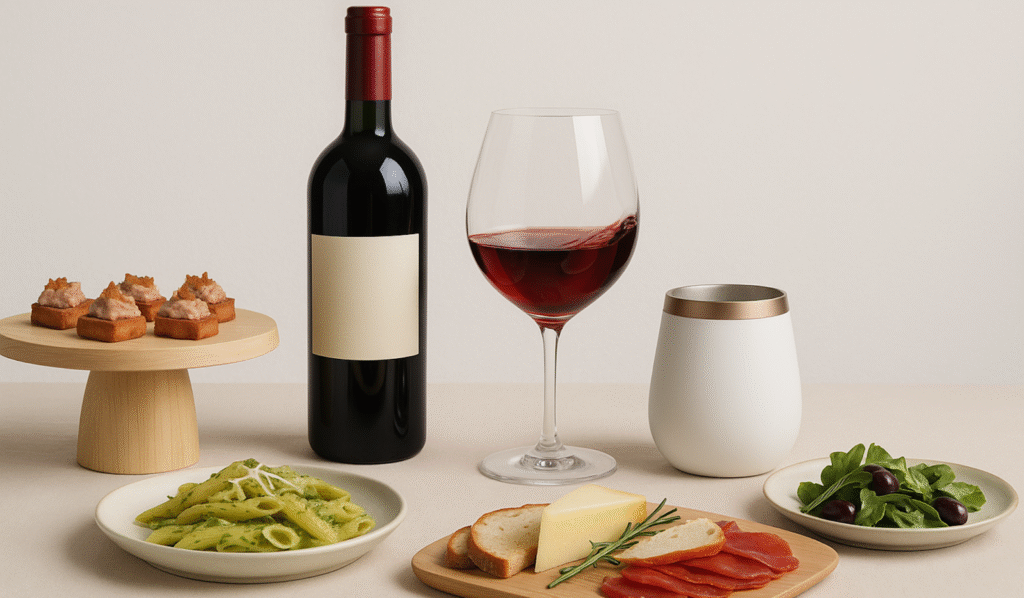
Wine culture has evolved far beyond candlelit dinners and sommelier-led tastings. Today it thrives in new settings such as seaside picnics, rooftop gatherings, backyard barbecues, and relaxed evenings at home. This shift reflects how people now approach wine not as a luxury reserved for formal occasions but as a shared pleasure that fits naturally into everyday life. Modern drinkers want experiences that are as flexible and effortless as their lifestyles, and that change has inspired a quiet revolution in wineware.
The debate between wine tumblers and traditional wine glasses captures this transformation perfectly. One represents timeless elegance and sensory precision, while the other offers convenience, portability, and modern practicality. The best choice depends on the setting: use wine glasses when you want to appreciate aroma, flavor, and presentation, and choose wine tumblers for casual gatherings, outdoor adventures, or travel where durability and temperature control matter most. Understanding when to use each helps elevate every sip, no matter the occasion.
Key Takeaways:
- Choose based on setting, not rules. Wine glasses elevate formal occasions with elegance and aroma clarity, while tumblers shine in relaxed, outdoor, or travel-friendly moments.
- Function follows design. Glasses are built for sensory precision, enhancing aroma and flavor through shape and temperature control. Tumblers prioritize insulation, durability, and comfort.
- Match vessel to wine type. Red wines benefit most from glasses that allow aeration. White and sparkling wines perform well in tumblers where temperature retention matters more.
- Owning both gives flexibility. A set of glasses for refinement and tumblers for convenience ensures you enjoy every wine, in every setting, exactly as intended.
What Defines Each: Wine Glass vs Wine Tumbler
The Classic Wine Glass
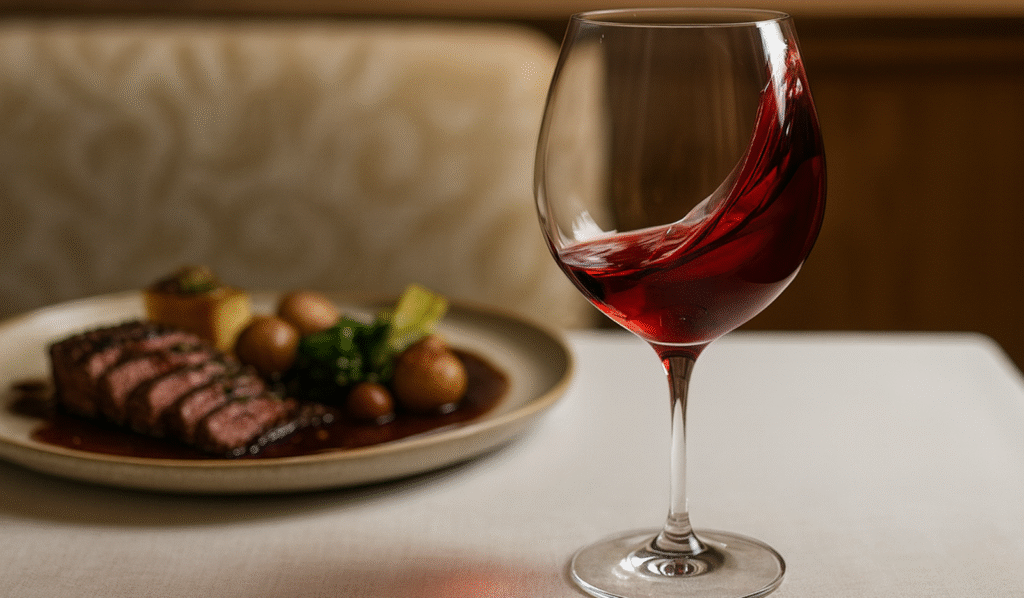
The traditional wine glass has remained essential to the art of wine drinking because every element of its structure enhances the experience. Its purpose goes beyond beauty; it is a tool designed to express the character of each wine fully.
- Bowl: The rounded shape allows wine to breathe and release its bouquet of aromas. The curvature also directs those aromas toward the nose, enriching the flavor profile with each sip.
- Stem: Keeps your hand away from the bowl so body heat does not alter the wine’s temperature. It also provides a stable and elegant grip, adding refinement to the ritual of drinking.
- Base: Offers balance and stability while supporting the overall structure of the glass.
Most traditional wine glasses are made from glass or crystal. Crystal, known for its clarity and thinness, enhances the way light refracts through the wine and provides a smoother rim that allows the liquid to glide gracefully across the palate. This level of detail is why wine glasses are often paired with specific varietals such as Pinot Noir, Chardonnay, or Cabernet Sauvignon, each revealing unique aromas and textures depending on the glass shape.
A classic wine glass transforms drinking into a sensory experience that engages sight, smell, and taste. It remains the choice for moments when precision, presentation, and elegance matter most.
The Modern Wine Tumbler
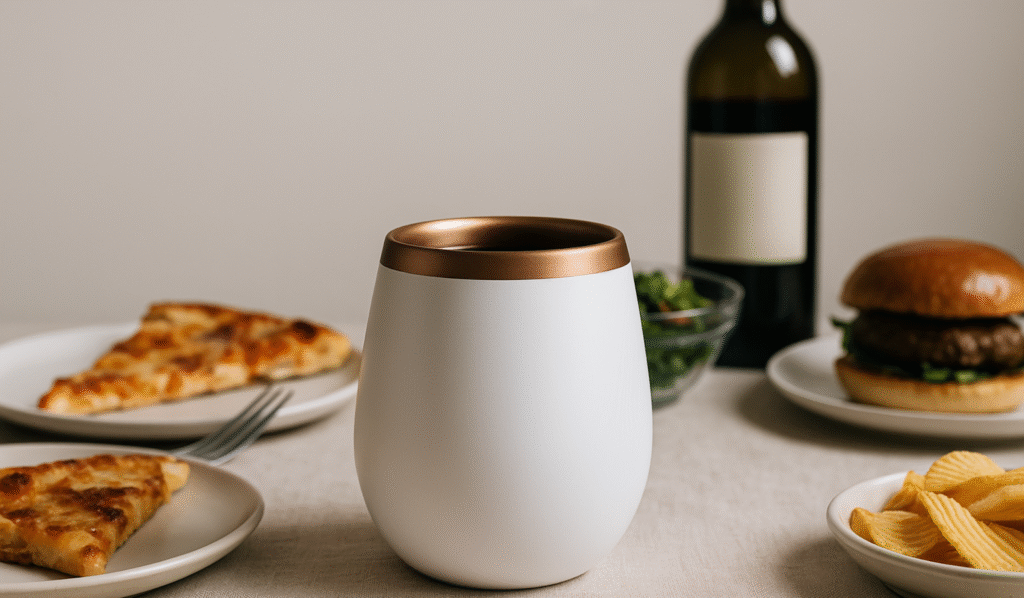
The wine tumbler reflects today’s more relaxed and mobile approach to wine enjoyment. Its simple, stemless design offers versatility and durability for settings where formality takes a back seat to practicality.
Key features of a wine tumbler:
- Material: Commonly made from stainless steel, insulated metal, or shatterproof acrylic for long-lasting durability.
- Shape: Compact and stable, reducing the risk of tipping or spilling during outdoor use.
- Insulation: Keeps wine at a consistent temperature, perfect for chilled rosé, white, or sparkling wine on warm days.
- Ease of care: Typically dishwasher safe and resistant to breakage, making cleanup effortless.
Tumblers are ideal for outdoor picnics, poolside lounging, camping trips, or casual evenings where safety and comfort matter more than presentation. They come in many colors and finishes, allowing for personal expression through design. While they do not concentrate aromas as effectively as a traditional wine glass, they excel in convenience, portability, and everyday enjoyment.
A wine tumbler is about freedom. It allows you to enjoy wine anywhere without worrying about fragility. It brings the joy of wine into spaces where glass cannot go, making it an essential part of modern wine culture.
Aesthetic and Sensory Experience
The way wine looks, smells, and tastes is deeply influenced by the vessel that holds it. The difference between a wine glass and a tumbler goes beyond design preference; it changes how your senses interpret the wine itself.
1. Visual Appeal
A traditional wine glass elevates presentation. The clarity of glass or crystal allows the color, viscosity, and sparkle of the wine to shine. Watching light dance through a Pinot Noir or Champagne enhances anticipation before the first sip.
A tumbler, while modern and minimal, prioritizes a sleek and practical look over translucency. Stainless steel or matte finishes conceal the wine’s hue, but they fit beautifully in casual and contemporary settings, especially outdoors.
2. Aroma and Taste
The shape of a wine glass is designed to guide aromas toward your nose. The bowl’s curvature concentrates delicate notes that help reveal layers of fruit, oak, or spice. As you swirl the wine, oxygen interacts with the surface, softening tannins and opening complex aromas.
A tumbler has a wider, more open mouth and lacks that aromatic concentration. The scent of the wine disperses faster, which can slightly mute subtleties in flavor. However, for refreshing white or sparkling wines where crispness matters more than bouquet, this difference is minimal.
3. Sensory Connection
Holding a glass by the stem keeps the bowl cool, preserving the wine’s intended temperature. This balance ensures that every sip delivers the same character from start to finish.
A tumbler, held directly in the palm, creates a more tactile connection with the drinker. It feels sturdy and informal, inviting relaxation rather than ceremony. The weight and shape of a tumbler contribute to a sense of comfort and approachability that aligns with today’s casual wine experiences.
4. When Presentation Matters
Formal dinners, tasting rooms, and romantic settings often call for traditional glassware because presentation becomes part of the ritual. A beautifully curved glass complements the sensory performance of the wine and heightens the overall experience. In contrast, tumblers shine in moments defined by ease and spontaneity—picnics, travel, or social gatherings where the goal is enjoyment rather than precision.
Practical Differences: Temperature, Portability, and Maintenance
| Category | Wine Glasses | Wine Tumblers | Best Use Case |
| Temperature Control | Exposes wine to air, so it quickly reaches room temperature. Ideal for reds that benefit from slight warmth and aeration. | Insulated or double-walled designs retain chill for hours, keeping white, rosé, and sparkling wines perfectly cool. | Wine tastings, dinner parties, and indoor settings for glasses; picnics, travel, or outdoor gatherings for tumblers. |
| Portability and Durability | Elegant but fragile, best for formal dining or indoor use. Thin stems and bowls make them delicate to transport. | Shatter-resistant, sturdy, and easy to pack. Compact design fits into picnic baskets or travel bags without worry. | Ideal for outdoor dining, beaches, poolside, and casual get-togethers. |
| Cleaning and Storage | Often hand-wash only, with wide bowls and tall stems that take up storage space. | Usually dishwasher-safe, stackable, and low-maintenance. Built for easy cleanup and storage. | Everyday use, travel, or small kitchens where convenience matters most. |
| Taste and Aroma Impact | Concentrates aroma and enhances flavor precision. | Slightly mutes aroma but maintains temperature and flavor integrity for casual drinking. | Choose glass for wine appreciation, tumbler for relaxed enjoyment. |
The Role of Wine Type: Red, White, or Sparkling
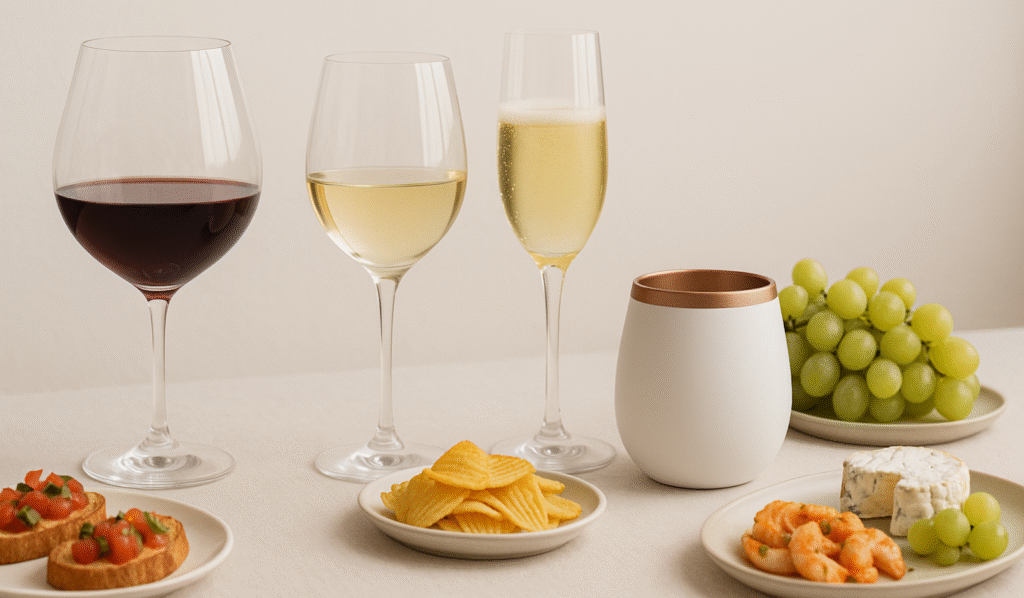
Not every wine thrives in the same vessel. The ideal choice depends on the wine’s body, aroma profile, and serving temperature. Some wines benefit from the aeration and aroma focus of a glass, while others are better suited to the temperature control and durability of a tumbler.
Red Wines
Red wines reveal their complexity when they can breathe. The wider bowl of a traditional wine glass encourages aeration, helping to release deep aromas of fruit, spice, and oak while softening tannins. The curved design also guides the wine toward the palate in a way that highlights its balance and depth. Because tumblers have a more open shape and less exposure to air movement, reds may taste muted when served in them. For full-bodied or aromatic reds such as Cabernet Sauvignon, Merlot, and Pinot Noir, a wine glass allows the wine to fully express its character.
White Wines
White wines are most enjoyable when served cool and crisp. Tumblers, especially insulated ones, help preserve that freshness longer than traditional glassware. While a wine glass may still enhance delicate aromas like citrus, pear, or flowers, a tumbler keeps the wine at its ideal temperature throughout your drink. This makes it especially practical for casual sipping, picnics, or warm weather. For light or medium-bodied whites such as Sauvignon Blanc, Pinot Grigio, or Chardonnay, both options work well depending on the setting.
Sparkling Wines
Sparkling wines rely on both temperature and bubbles for their charm. The slender shape of a flute or tulip glass helps maintain effervescence and concentrate aromas, which enhances the lively sensation of each sip. A tumbler, on the other hand, keeps the wine colder for longer but allows carbonation to fade more quickly. For relaxed outdoor occasions, tumblers are ideal for convenience and temperature control, while for toasts and celebrations, the elegance of a flute is unmatched.
Comparison Summary:
| Wine Type | Best in Glass | Best in Tumbler | Reason |
| Red | Better suited | Less suitable | Requires aeration and aroma development for full flavor |
| White | Equally good | Equally good | Temperature retention and balanced aroma work in both |
| Sparkling | Preferred choice | Practical alternative | Glass preserves bubbles while tumblers maintain chill outdoors |
Choosing the right vessel for each wine type enhances not only taste but also the overall experience. Glasses highlight the artistry of fine wines, while tumblers bring freedom and convenience to more relaxed moments.
When to Use Each: Setting and Occasion
The right vessel for wine depends not only on the type of wine but also on the setting and the atmosphere you want to create. A glass or tumbler can completely change how an occasion feels, turning an ordinary drink into an experience that reflects your personality and lifestyle.
Wine Glasses
Wine glasses suit occasions where presentation, flavor, and tradition matter most. They bring a sense of ceremony to the table, enhancing not just the wine’s aroma but also the elegance of the moment.
Best occasions for wine glasses:
- Dinner parties: Elevate meals with guests and showcase each wine’s character in its ideal glass shape.
- Tasting events: Perfect for sampling and comparing different varietals, where clarity of aroma and flavor is key.
- Romantic dinners: Create a sophisticated atmosphere that turns an intimate meal into a memorable experience.
- Formal gatherings: Complement table settings, crystal ware, and plated dishes where refinement matters.
Wine glasses pair beautifully with an elegant lifestyle, where attention to detail, aesthetic harmony, and sensory depth are appreciated. They suit moments that celebrate mindfulness and connection.
Wine Tumblers
Wine tumblers bring comfort, practicality, and modern design to any casual occasion. They invite relaxation, making wine accessible without the fear of spills or breakage. Their sturdy and portable build fits effortlessly into today’s more flexible lifestyles.
Best occasions for wine tumblers:
- Picnics and outdoor brunches: Easy to pack, durable, and able to keep wine chilled under the sun.
- Poolside or beach gatherings: Safe around water where glass is not allowed or recommended.
- Camping or road trips: Compact, resilient, and simple to clean while traveling.
- Casual evenings at home: Perfect for relaxed sipping on the couch or balcony.
Tumblers align with an easygoing lifestyle, where enjoyment takes precedence over formality. They embody simplicity, freedom, and modern practicality, allowing wine to be enjoyed anywhere without worry.
Choosing between a glass and a tumbler is less about rules and more about mood. When the occasion calls for sophistication and sensory precision, reach for a wine glass. When comfort, spontaneity, and mobility define the moment, a tumbler is your perfect companion.
Sustainability and Material Considerations
Today’s wine lovers often consider not only how a vessel looks and feels but also how it impacts the environment. The choice between a tumbler and a glass can reflect both personal values and lifestyle priorities.
Eco-conscious factors to consider:
- Recyclability: Glass is endlessly recyclable without losing quality, making it a classic choice for sustainability. Stainless steel tumblers are also eco-friendly because they last for years, reducing the need for replacements.
- Toxin-free materials: Modern tumblers are often made from BPA-free stainless steel or food-grade acrylic, while high-quality wine glasses are lead-free, ensuring safe and pure sipping.
- Durability and longevity: A sturdy tumbler or tempered glass reduces waste over time by minimizing breakage and the need for frequent replacements.
Ultimately, both options can align with sustainable living. It depends on how and where you use them. Tumblers made of stainless steel offer long-term durability and insulation, while glass options preserve purity and taste clarity.
Expert Recommendations: Matching Your Lifestyle
The best vessel for wine isn’t about right or wrong—it’s about fit. Your ideal choice depends on your habits, environment, and how you enjoy wine in daily life.
Choose wine glasses if you:
- Appreciate the full aroma, clarity, and balance of fine wine.
- Enjoy hosting dinners or tasting events where presentation matters.
- Prefer an elegant, traditional atmosphere that highlights refinement.
Choose wine tumblers if you:
- Value practicality and portability more than formal presentation.
- Frequently enjoy wine outdoors or while traveling.
- Want easy maintenance and long-lasting use.
Many enthusiasts keep both. A set of wine glasses for special occasions and a pair of insulated tumblers for casual moments gives you flexibility for every situation. Look for durable and high-quality designs such as double-wall insulation, shatterproof finishes, and crystal-clear glass that elevate both form and function.
Common Myths About Tumblers and Wine Glasses
Misconceptions often influence how people choose between the two. In reality, both serve their purpose when used thoughtfully.
- “Tumblers ruin wine.” Not true. Tumblers may not enhance aroma as much as a glass, but they preserve temperature and flavor perfectly for casual drinking.
- “All glass is fragile.” Advances in tempered and reinforced glass make many wine glasses far more durable than traditional crystal.
- “You can’t use tumblers for red wine.” You can, especially if the wine is served slightly below room temperature. While aeration is limited, flavor remains intact for relaxed enjoyment.
Understanding these truths allows you to make confident choices based on use rather than outdated assumptions.
Choosing the Right One for You
If you’re still undecided, consider a few practical questions to find your ideal match.
Checklist for decision-making:
- Where do you usually drink wine—indoors, outdoors, or both?
- Do you prioritize taste, aroma, and tradition, or ease and convenience?
- Do you host formal dinners, tastings, or relaxed gatherings?
- How often do you travel, picnic, or enjoy wine outside?
Your answers will reveal which option aligns with your lifestyle. For ultimate enjoyment, choose both—glasses for flavor, tumblers for freedom.
FAQs
Can you drink wine from a stainless steel tumbler?
Yes. Stainless steel tumblers are safe for wine and excellent at maintaining temperature. High-quality models will not alter the flavor or aroma.
Do wine tumblers change the taste?
Not significantly. While the lack of a narrow rim reduces aroma intensity, the overall flavor remains unchanged, especially for white and sparkling wines.
Why are wine glasses better for red wine?
They provide aeration and a concentrated aroma pathway, allowing complex notes to unfold as you sip.
Are wine tumblers good for gifts?
Yes. Personalized or insulated tumblers make practical and stylish gifts for wine lovers who enjoy casual or outdoor occasions.
Which is better for outdoor events: wine glass or tumbler?
Tumblers are more suitable because they are durable, portable, and keep wine cool even in warm weather.
Elevate the Experience, Not Just the Vessel
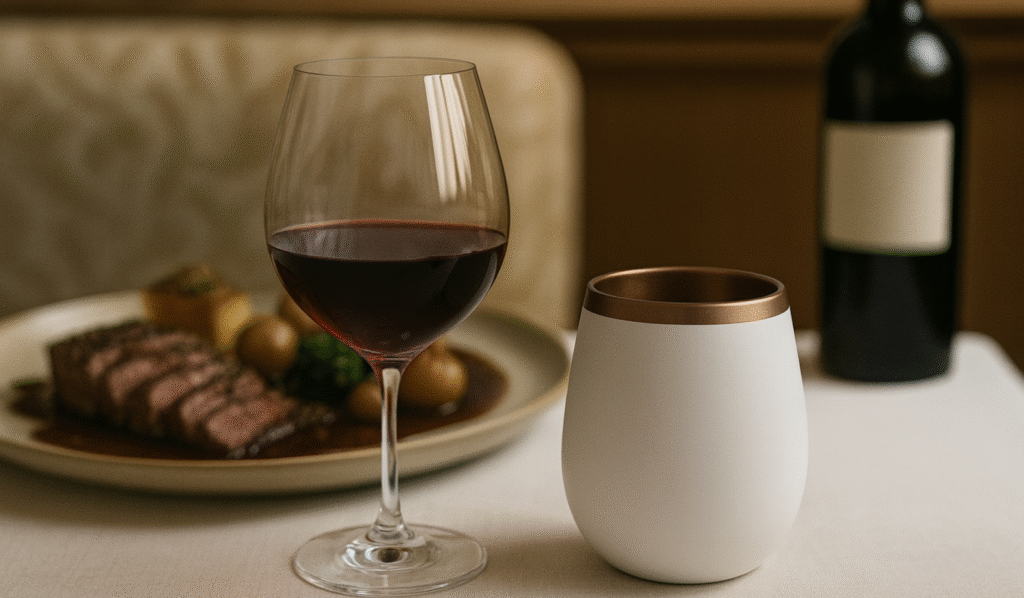
The choice between a wine glass and a tumbler ultimately comes down to context, taste, and lifestyle. A glass refines the experience, highlighting the delicate craftsmanship of each varietal. A tumbler celebrates spontaneity and comfort, making wine accessible anywhere.
Embracing both reflects a balanced approach to modern wine culture, one that values sophistication as much as simplicity. Whether you are clinking crystal at a candlelit dinner or sipping chilled rosé under the open sky, what matters most is the moment shared and the joy within every pour.
At Wine-n-Gear, we offer a curated collection of wine accessories, elegant glassware, and versatile tumblers to elevate every occasion. Explore pieces that combine beauty, function, and lasting quality to make every sip memorable.