Types of Wine Glasses Explained: The Complete Beginner’s Guide
Choosing the right wine glass is easier than most beginners expect. The best starting point is to use either a universal wine glass or two basic shapes: one larger glass for red wines and one smaller glass for white wines. This simple approach matches the way wine professionals structure tastings while keeping decisions manageable for new drinkers.
For beginners, the priority is not to memorize every contour or stem length but to understand how different shapes influence balance, aroma, and overall enjoyment. Focusing on a few essential categories makes it possible to explore wine with confidence, select practical glass types for everyday use, and build a small collection that suits one’s lifestyle, drinking habits, and storage space.
Key Takeaways
- A basic two-glass system—one for reds and one for whites—covers most beginner needs
- Universal glasses are a practical all-purpose choice for homes with limited storage
- Larger glasses benefit structured reds, while smaller glasses preserve fresh white wines
- Sparkling, rosé, and dessert wines do not require specialty shapes when starting out
- Quality, durability, and rim thinness matter more for beginners than owning multiple glass types
Understanding the Wine Glass Basics
The Essential Two-Glass Starter Rule
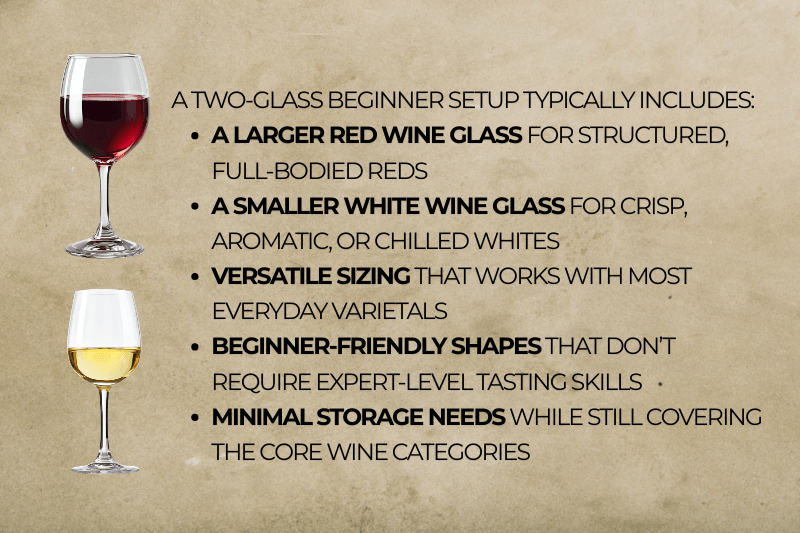
Beginners often benefit most from a simple setup consisting of a larger red wine glass and a smaller white wine glass. This rule aligns with how wine behaves: fuller-bodied reds benefit from more room to open up, while whites taste fresher in narrower formats. The goal is not perfection but practicality, ensuring that a small collection delivers strong performance across common wine styles.
Universal Glasses: Why They Work for New Drinkers
A universal wine glass functions as an all-purpose option that suits red, white, rosé, and even sparkling wines. Its medium bowl and gentle taper create a balanced environment for varied wine styles. Universal glasses are ideal for anyone who wants to avoid multiple shapes, maintain minimalist storage, or host casual gatherings without needing specialized glassware.
Key advantages of universal wine glasses include:
- Versatility that handles most wine styles with balanced performance
- Medium bowl size that supports both aeration and aroma concentration
- Beginner-friendly design that removes the pressure of choosing specific shapes
- Space-saving storage perfect for small kitchens or compact collections
- Consistent drinking experience without the need to switch glasses between pours
Why Stems Matter
Stems help control temperature and keep fingerprints away from the bowl. For beginners, this makes the experience more consistent and visually clean. Stemmed glasses also improve swirling stability, which enhances aroma release even when drinkers are still learning proper technique. Stemless designs can still be used but introduce heat transfer and reduced swirling control.
Why stemmed glasses remain the better choice for most beginners:
- Better temperature control by preventing hand warmth from heating the wine
- Cleaner presentation with fewer smudges and fingerprints on the bowl
- Improved swirling stability for easier aroma release
- More precise grip that mimics professional tasting technique
- Easier to handle when pouring, clinking, or hosting guests
Everyday Glasses vs Tasting Glasses
Everyday glasses are designed for comfort, durability, and ease of handling. Tasting glasses, such as ISO wine glasses, follow standardized dimensions used in wine judging and education. Beginners often start with everyday glasses and incorporate tasting glasses only when exploring structured comparisons or hosting guided tastings.
How the two types differ in practical use:
- Everyday glasses prioritize durability, simple shapes, and easy cleaning
- Tasting glasses are standardized for consistency in aroma and flavor evaluation
- Everyday designs suit casual drinking, meals, and entertaining
- ISO-style tasting glasses highlight subtle differences for learning and comparison
- Beginners typically adopt tasting glasses later when exploring wines more intentionally
Types of Wine Glasses Explained
Red Wine Glasses
1. Bordeaux Glasses
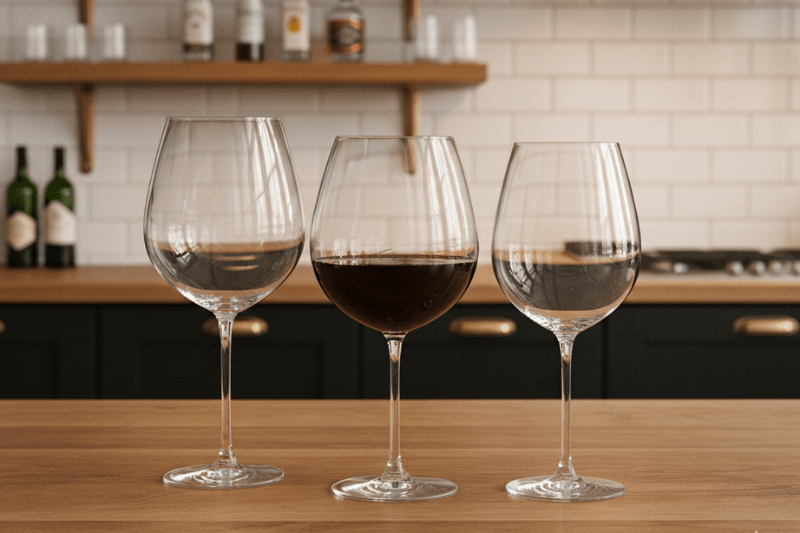
Bordeaux glasses feature tall sides and a broad bowl designed for structured red wines. Wines such as Cabernet Sauvignon, Merlot, and Syrah benefit from the height and openness, which direct wine toward the back of the palate and soften firm tannins. This is the best first choice for beginners who enjoy full-bodied reds.
Key characteristics:
- Tall, slightly tapered shape
- Broad bowl for strong aeration
- Ideal for structured varietals with firm tannins
- Encourages smoother texture and deeper aroma expression
2. Burgundy Glasses
Burgundy glasses have a rounder, wider bowl that accommodates aromatic, delicate red wines like Pinot Noir and Nebbiolo. The generous curvature collects subtle floral and earthy aromatics, allowing beginners to experience complexity without needing professional tasting skills.
Key characteristics:
- Wide bowl that enhances delicate aromatics
- Funnel-like shape that concentrates subtle notes
- Best for lighter reds with floral or earthy profiles
- Helps capture nuance even at beginner level
Standard Red Wine Glass
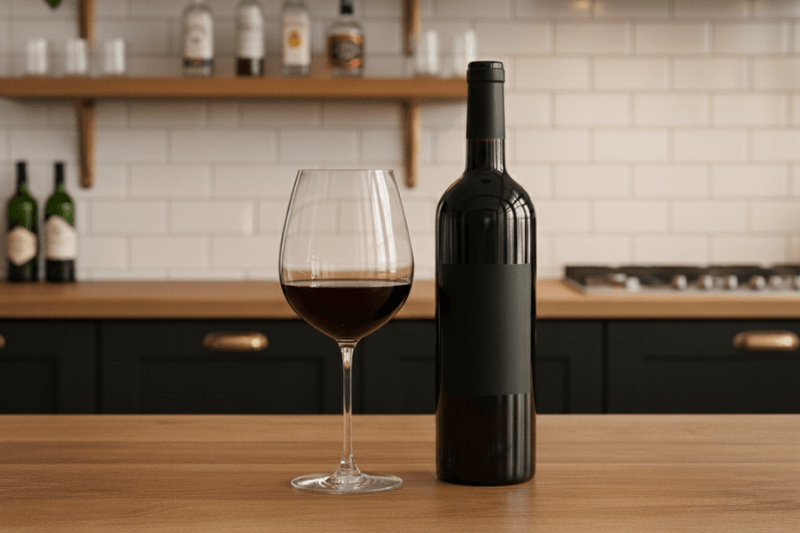
This simplified design bridges the gap between Bordeaux and Burgundy glasses. It works well for most red wines and is common in starter sets. Beginners who want a single red wine glass often choose this shape because it supports a wide range of varietals without overwhelming storage space.
Key characteristics:
- Balanced bowl size suitable for multiple red styles
- Moderately tall profile for easy swirling
- Practical for everyday red wine drinking
- Ideal for households wanting just one red glass shape
White Wine Glasses
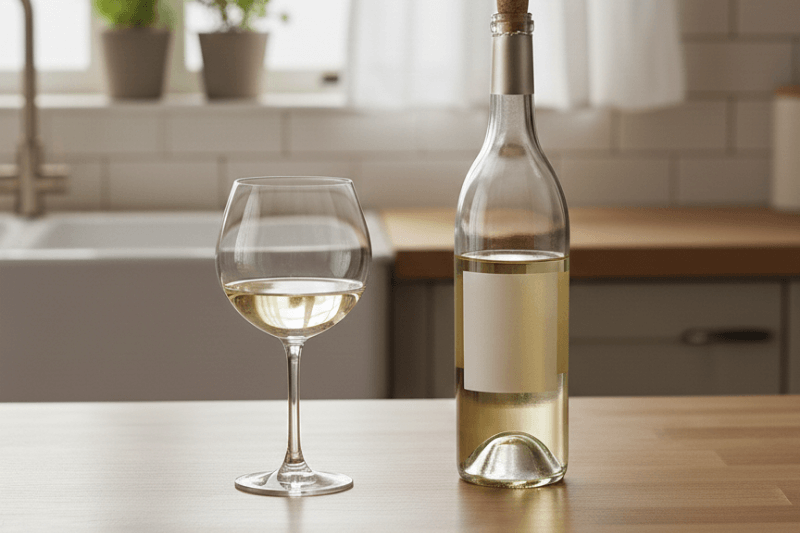
Fresh and Aromatic White Glass
This upright, narrower glass suits crisp whites such as Sauvignon Blanc, Pinot Grigio, and Riesling. Its compact shape helps preserve acidity, floral notes, and citrus-driven aromas. For beginners, this glass provides a clear representation of freshness without altering the wine’s intended character.
Key characteristics:
- Narrow bowl to maintain cooler temperatures
- Upright shape that supports high-acid wines
- Enhances citrus, floral, and herbal notes
- Best for aromatic, refreshing white wines
Full-Bodied White Glass
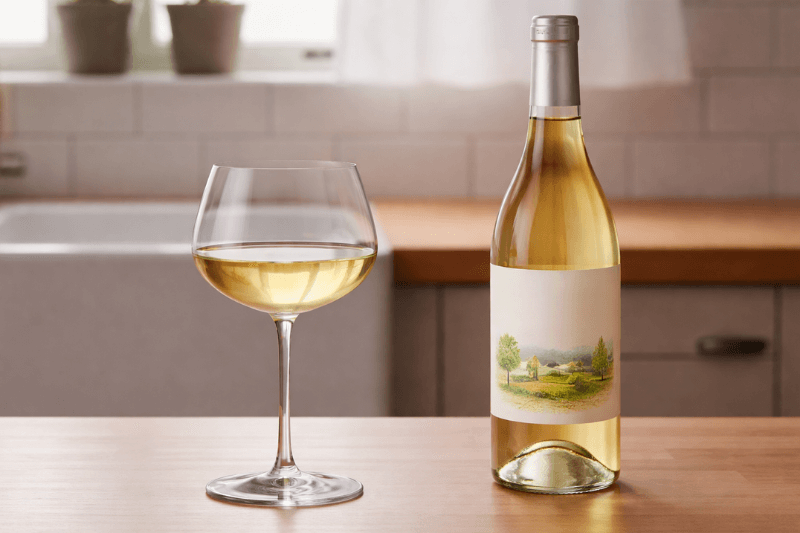
Broader white wine glasses accommodate richer, fuller-bodied whites like Chardonnay and Viognier. The added width supports texture, weight, and any oak-influenced aromas. Beginners exploring white wines with more depth will notice improved expressiveness with this shape.
Key characteristics:
- Slightly wider bowl to accommodate fuller textures
- Supports oak-driven aromas such as vanilla or toast
- Ideal for creamy, weighty white wines
- Allows subtle complexity to open gradually
Everyday White Wine Glass
Everyday white glasses fall between the aromatic and full-bodied categories. Their moderate size keeps higher-acid whites crisp while offering enough room for wines with texture. This versatility makes them a popular choice for households that drink a variety of white wines.
Key characteristics:
- Medium bowl suitable for a broad range of whites
- Good balance of freshness and aroma release
- Practical choice for mixed white wine preferences
- Beginner-friendly, space-efficient design
Sparkling Wine Glasses
1. Flute
Flutes are tall and narrow, built to preserve carbonation and create a steady bubble stream. Beginners commonly choose flutes for celebrations because they enhance visual appeal and maintain effervescence. Although flutes limit aromatic complexity, they satisfy the key beginner priorities: bubbles and presentation.
Key characteristics:
- Tall, slender profile to retain carbonation
- Visually attractive bubble column
- Ideal for lively, everyday sparkling wines
- Best for parties, toasts, and celebrations
2. Tulip Glass
Tulip glasses offer a modern alternative that balances effervescence with aroma release. The curved bowl captures floral, citrus, and brioche notes more effectively than flutes. Beginners who enjoy premium sparkling wines or Champagne often gravitate toward this shape as a first upgrade.
Key characteristics:
- Curved bowl with a gently tapered top
- Supports both bubbles and aromatics
- Reveals complexity in higher-quality sparkling wines
- Suitable for Champagne and vintage cuvées
Universal Sparkling Glass
This design resembles a hybrid between a small white wine glass and a flute. It is a practical solution for beginners who occasionally drink sparkling wines and prefer not to store multiple specialized glasses.
Key characteristics:
- Moderate size with slight taper
- Good balance of effervescence and aroma release
- Space-saving alternative to dedicated sparkling glasses
- Ideal for infrequent sparkling wine drinkers
Rosé Wine Glasses
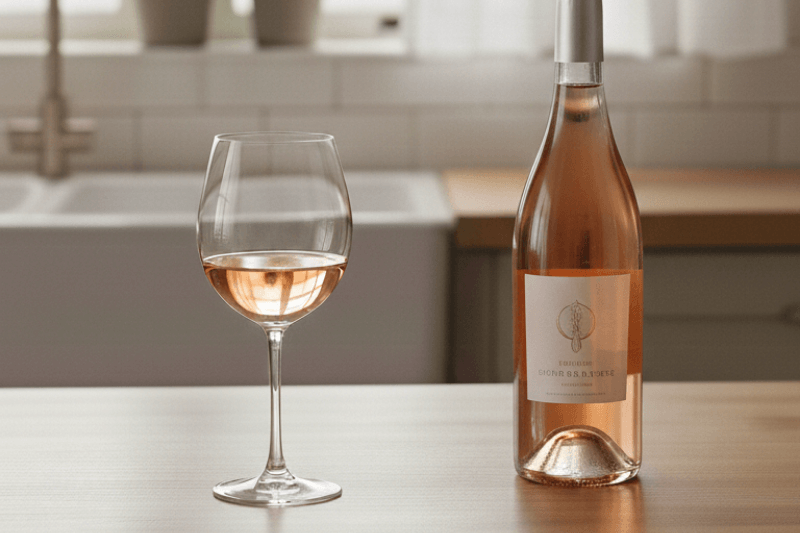
Rosé can be served in various glass formats, but beginners achieve excellent results using standard white wine glasses. For sweeter or fruitier rosés, a glass with a gently outward-curving rim can emphasize red fruit flavors. Regardless of shape, rosé remains one of the most forgiving wine categories for beginners when selecting glassware.
Key characteristics:
- Performs well in classic white wine glasses
- Slight outward flare can highlight fruit notes
- No strict shape requirements for casual drinking
- Beginner-friendly across all rosé styles
Dessert and Fortified Wine Glasses
Dessert and fortified wines are typically served in smaller glasses because their flavors are concentrated and their alcohol levels are higher. Compact shapes help guide sweetness and aromatics without overwhelming the senses. For beginners, the most important factor is portion control rather than specific bowl geometry.
Key characteristics:
- Small, narrow bowls to control portion size
- Accentuates sweetness and concentrated aromatics
- Suitable for Port, Sherry, Madeira, and late-harvest wines
- Practical choice even for occasional dessert wine drinkers
How to Choose the Right Glass as a Beginner
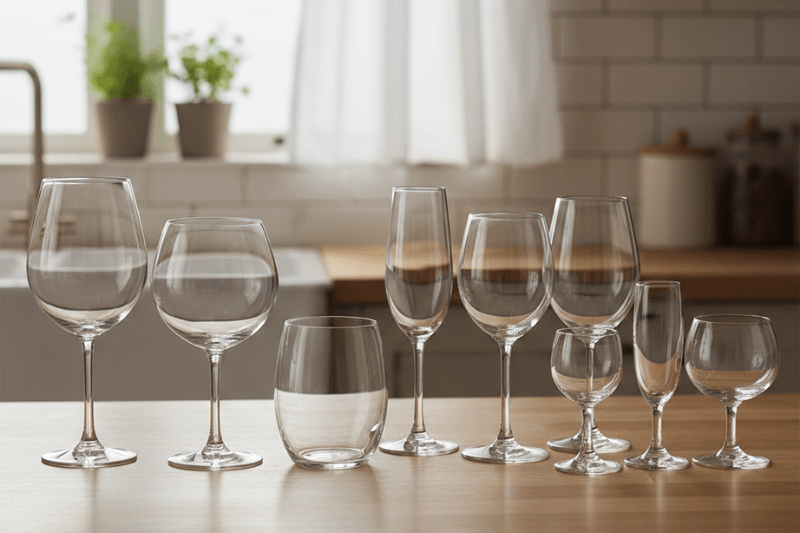
Start With Purpose, Not Collecting
Beginners should select glass types based on the wines they actually drink. Someone who prefers red wine will find more value in larger red wine glasses, while a white-wine-focused household benefits from versatile, upright white glasses. Collecting every shape is unnecessary in the early stages of learning.
A purpose-driven approach includes:
- Choosing glasses that match the wine styles consumed most often
- Prioritizing functionality over variety or aesthetic sets
- Avoiding clutter by focusing on the essentials first
- Identifying which wines taste better with more room vs more focus
- Building confidence gradually instead of purchasing full collections upfront
Choosing Based on Frequency
Occasional wine drinkers can rely on universal or everyday glasses. Weekly drinkers may benefit from adding a red and white glass pair. Those who host guests or enjoy varied wine styles may choose a simple starter collection with red, white, and sparkling options.
Frequency-based selection typically looks like:
- Occasional drinkers: 1–2 universal wine glasses
- Weekly drinkers: One red glass + one white glass
- Entertainers: A small set covering red, white, and sparkling
- Explorers: A versatile collection that supports learning and comparison
- Minimalist households: Compact, stackable, or durable designs
How Many Glasses Do Beginners Actually Need?
A three-glass starter set typically includes:
- One red wine glass
- One white wine glass
- One sparkling wine flute or tulip
This basic trio covers most wine styles without requiring specialized shapes. An expanded five-glass set adds a universal glass and a dessert wine glass, giving beginners more versatility without placing pressure on storage space.
Typical beginner-friendly setups include:
- 3-glass essentials: Red glass, white glass, sparkling flute/tulip
- 5-glass expansion: Adds a universal and a dessert wine glass
- Minimalist option: Two universal glasses for everyday wines
- Entertainer option: A small matching set for hosting
- Exploration-ready option: A red, white, sparkling, and universal glass mix
Material Comparison for Beginners
Crystal provides greater clarity and a finer rim, while standard glass offers durability and affordability. Lead-free crystal is recommended for beginners seeking added elegance without the upkeep associated with traditional crystal. Tempered glass options support households prioritizing break resistance.
Key material differences:
- Crystal: Thinner rims, better clarity, elevated presentation
- Lead-free crystal: Safer, modern alternative with similar refinement
- Standard glass: Durable, affordable, easy to replace
- Tempered glass: Best for high-breakage environments
- Hand-blown vs machine-made: Hand-blown offers lightweight elegance; machine-made provides consistency and strength
Stemless vs Stemmed
Stemless glasses offer durability and convenience but warm the wine more quickly. Stemmed glasses provide better temperature control and swirling ability. Stemless designs suit casual settings, while stemmed designs deliver a more precise tasting experience.
Choosing between the two:
- Stemmed glasses: Ideal for temperature-sensitive wines and formal settings
- Stemless glasses: Great for casual use and durability
- Stemmed designs: Provide better control for swirling and aroma release
- Stemless designs: Reduce tipping risk and store easily
- Beginners: Should prioritize stemmed glasses for accuracy and consistency
How Shape Influences Wine for Beginners
The “Air, Aroma, and Temperature” Rule
Beginners only need to understand three principles:
- Larger glasses expose more wine to air
- Narrower glasses focus aroma
- Stems help maintain temperature
This simplified model removes the need for technical sensory analysis and makes wine exploration more intuitive.
What Beginners Actually Notice
Most beginners observe differences in aroma intensity and temperature more than structural or textural changes. Starting with shapes that highlight these noticeable qualities helps build early appreciation without creating confusion or overwhelming detail.
Common beginner observations include:
- Stronger aromatics in slightly tapered glasses
- Cooler, fresher whites in smaller bowls
- Softer reds when poured into slightly larger shapes
- More pronounced aromas when swirling is easier
- Temperature changes when holding stemless glasses
The “One Upgrade at a Time” Approach
Beginners benefit from upgrading one glass type at a time based on personal drinking habits. This approach allows for gradual improvement in tasting performance without the expense or storage demands of purchasing a complete set at once.
Smart upgrade strategies include:
- Starting with a universal glass, then adding a red or white glass
- Prioritizing the glass type used most frequently
- Choosing upgrades that match preferred wine styles
- Replacing lower-quality glasses with refined, thinner-rimmed versions
- Assessing differences over time to understand personal preferences
Best Wine Glass Recommendations for Beginners
What Makes a Beginner-Friendly Glass?
Beginner-friendly glasses share several traits: moderate size, balanced weight, thin but durable rims, and uncomplicated shapes. Dishwasher-safe options can also be suitable, depending on the material and manufacturer.
Qualities that define a good beginner glass include:
- Moderate bowl size that works for multiple wine styles
- Balanced weight for comfortable holding and swirling
- Thin, durable rims that enhance smooth sipping
- Simple, tapered silhouettes that support aroma development
- Dishwasher-safe materials for easy maintenance when possible
Common Mistakes Beginners Make
New wine drinkers often choose glasses that are too large, too tall, or overly decorative. Heavy bowls and thick rims reduce aroma expression, while novelty shapes interfere with proper swirling and pour control.
Frequent beginner pitfalls include:
- Choosing oversized glasses that overwhelm everyday wines
- Selecting designs with thick rims that dull flavor perception
- Buying heavy glasses that fatigue the hand during use
- Prioritizing aesthetics over functionality
- Opting for novelty shapes that disrupt proper wine presentation
What to Avoid at the Start
Beginners should avoid colored glass, opaque coatings, and intricate molded designs. These styles obscure clarity, making it difficult to observe color and viscosity—two visual cues that help beginners learn how wine behaves in the glass.
Shapes and styles to skip initially:
- Colored or tinted glass that hides the wine’s appearance
- Opaque or frosted coatings that prevent visual assessment
- Decorative molds or patterns that trap residue or bubbles
- Highly angular or novelty shapes that distort swirling
- Ultra-fragile stems that break easily during early learning
Cleaning, Handling, and Storing Wine Glasses
Easy Cleaning Methods
Warm water, mild detergent, and microfiber cloths are sufficient for most wine glasses. Beginners should avoid abrasive pads and scented dish soaps that leave residue or transfer unwanted aromas to the wine.
Beginner-friendly cleaning tips:
- Rinse glasses with warm water immediately after use
- Use mild, unscented detergent only when necessary
- Dry with a microfiber or lint-free cloth to prevent streaks
- Hold the bowl gently while drying to avoid snapping stems
- Avoid abrasive scrubbers that scratch or cloud the glass
Storing Small Collections
A well-organized cabinet with adequate spacing prevents rim chipping and accidental breakage. Hanging racks can be helpful for stemmed glasses but are optional for beginners with limited space.
Smart storage practices include:
- Keeping each glass separated to prevent rim collisions
- Storing stemmed glasses upright rather than upside down
- Using shelf liners to stabilize delicate bases
- Choosing hanging racks for collections with longer stems
- Reserving dedicated cabinet space for frequently used sets
Extending the Life of Affordable Glassware
Rotating glasses during use, storing them upright, and drying with lint-free cloths help extend their lifespan. Even lower-cost glasses perform surprisingly well when handled with care.
Ways to maximize durability:
- Rotate everyday glasses to distribute wear evenly
- Store bowls upright to protect rims and prevent trapped moisture
- Use gentle drying motions to avoid twisting stress on stems
- Hand-wash thin-rimmed glasses instead of relying on dishwashers
- Separate glasses during storage to avoid accidental chipping
Building Confidence With the Right Wine Glasses
Selecting wine glasses does not need to be complicated. By focusing on a small number of essential shapes, beginners can enjoy balanced aromas, steady temperature, and clear varietal expression without the complexity of collector-level glassware. A thoughtful starter collection provides an accessible and enjoyable foundation for future wine exploration.
As interest grows, many beginners find it helpful to add basic wine accessories that support serving, storage, and preservation beyond the glass itself. These often include tools for opening bottles such as waiter’s corkscrews, double-hinge corkscrews, and electric openers. Accessories that control temperature such as ice buckets, wine coolers, and insulating sleeves are equally useful for keeping whites, rosés, and sparkling wines at the proper serving range. Preservation tools such as wine stoppers, Champagne stoppers, and vacuum pumps help maintain freshness between pours. Beginners may also explore items like drip rings, decanters, pour spouts, and wine storage racks to make everyday wine service more comfortable and consistent.
At Wine-n-Gear, we offer curated collections of wine accessories including corkscrews, wine stoppers, Champagne stoppers, ice buckets, and related tools that make these upgrades approachable for anyone building a home wine setup at a gradual pace.