The Ultimate Guide to Decanting Wine: When, Why, and How

There’s something quietly ceremonial about decanting wine. It’s more than just pouring liquid from one vessel to another; it’s a gesture that honors time, patience, and craftsmanship. The moment the bottle opens and the wine meets air, it begins to reveal a story that was hidden in the glass. Every swirl releases complexity, every pour invites discovery. If you’ve ever wondered when to decant, why it matters, or how to do it right, you’re in the right place. This isn’t just another “how-to” article; it’s a deep dive into the ritual, science, and emotion behind decanting, written for wine lovers who want to truly understand the soul of their bottle.
Key Takeaways
- Decanting wine enhances flavor by allowing oxygen to open up aromas and soften tannins, revealing depth and balance.
- Older red wines benefit most from decanting since it separates sediment and creates a smoother, more refined texture.
- Young bold reds improve significantly after 30–60 minutes in a decanter, gaining harmony and expressive flavor.
- Delicate or sparkling wines rarely need decanting because excess air exposure can dull their brightness and bubbles.
- Proper technique matters: pour slowly, use clean glassware, and taste along the way to find the wine’s perfect moment.
What Does Decanting Wine Really Mean?

Decanting means transferring wine from its bottle into another vessel, usually a decanter, to separate sediment and help the wine open up. It’s both practical and poetic. On a technical level, it prevents gritty residue from clouding your glass. On a sensory level, it allows the wine’s hidden layers to bloom, flavors soften, aromas intensify, and textures evolve. Decanting invites the wine to breathe and to become something more expressive than what was confined in the bottle.
Decanting vs aerating
Although both processes expose wine to air, they serve slightly different purposes. Aeration is about speed, it’s like waking up the wine quickly by letting it mix with oxygen. Decanting, on the other hand, is more graceful and intentional. It’s the difference between a quick handshake and a slow, meaningful embrace. Some wines respond well to both, but the ritual of decanting offers a tactile connection that mechanical aerators can’t quite replicate.
Decanter, carafe, and aerator differences
A decanter is designed for both function and beauty, featuring a wide base, open mouth, and shape that allows wine to breathe fully.
- Decanter: Ideal for separating sediment and allowing controlled aeration, often used for older or full-bodied wines.
- Carafe: Mostly used for serving wine without sediment separation, valued for its elegant presentation.
- Aerator: A device that injects air quickly as you pour, ideal for young wines that need rapid oxygen exposure.
In short, think of the decanter as the patient artist, the aerator as the speed coach, and the carafe as the graceful host at the table.
Why Should You Decant Wine?
Removing sediment
Older wines, especially reds, tend to accumulate sediment as they age. Decanting gently separates this from the liquid, ensuring a smoother sip. The result is not only visual clarity but also a more refined texture that lets the wine’s subtler notes shine through.
Enhancing aroma and flavor
When oxygen meets wine, magic happens. Aromas that were once shy emerge confidently, blackberries become bolder, oak softens, and spice lingers longer. Decanting helps release these layers, transforming a reserved bottle into something beautifully expressive.
Softening tannins
Young, robust reds often carry strong tannins that can feel sharp or astringent. Letting the wine sit in a decanter helps those tannins mellow, resulting in a rounder, silkier mouthfeel. It’s like giving the wine a moment to compose itself before taking the stage.
Improving presentation
A beautifully designed decanter instantly elevates the table. The wine’s color, movement, and clarity become part of the visual experience. Presentation isn’t vanity here, it’s part of the celebration of wine as art.
When not to decant
Not every wine benefits from decanting. Delicate, older vintages can fade quickly once exposed to air, and most whites, rosés, and sparkling wines prefer minimal contact with oxygen. When in doubt, test a small pour before committing the entire bottle.
When Should You Decant Wine?
| Wine Type | Recommended Decanting Time | Notes |
| Young Full-Bodied Reds (Cabernet, Syrah, Malbec) | 45–60 minutes | Helps soften tannins and open up aromas |
| Mature Reds (Bordeaux, Barolo, Burgundy) | 15–30 minutes | Gentle decanting preserves complexity |
| Light Reds (Pinot Noir, Beaujolais) | 10–20 minutes | Short decant to enhance subtle fruit notes |
| White Wines (Chardonnay, Viognier) | 5–15 minutes | Optional; enhances creaminess in oaked varieties |
| Dessert & Fortified Wines (Port, Sherry) | 10–15 minutes | Only if sediment is visible |
| Sparkling Wines | Not recommended | Loses effervescence quickly |
Wines that benefit most
Full-bodied reds like Cabernet Sauvignon, Syrah, Malbec, Bordeaux, and Barolo often thrive with decanting. These wines are structured and dense, needing time and air to reveal their best selves. The oxygen exposure allows the flavors to harmonize and the bouquet to fully unfold, creating a richer, more layered experience.
Wines that don’t need decanting
Light reds, crisp whites, and sparkling wines usually don’t need it. They’re meant to be fresh, lively, and delicate, with natural brightness that fades when overexposed to air. Enjoy them straight from the bottle to preserve their vibrancy and charm.
Decanting by age and style
Young wines often need longer exposure, typically around thirty to sixty minutes, to release intensity and structure. Mature wines, however, require gentler handling, as too much time can dull their complexity. Understanding a wine’s age and varietal character helps you tailor decanting to its needs.
Recommended decanting times
Every wine has its own rhythm when it comes to opening up. As a general guide, the younger and bolder the wine, the longer it should breathe before serving. Tasting along the way lets you find the exact point where aroma, texture, and flavor align perfectly.
Special cases: dessert, fortified, and sparkling wines
Port and dessert wines can contain sediment, but often lose sweetness and aroma if overexposed to air. Sparkling wines lose their effervescence quickly, though some sommeliers decant them briefly to soften bubbles for texture. Always balance intention with caution for these delicate styles.
Taste-test method
When unsure, pour a small amount into a glass, swirl, and taste before decanting the full bottle. If the wine feels tight or muted, a little air will help unlock its potential. Trust your senses and let them guide you toward the right moment to pour.
How to Decant Wine: Step-by-Step Process
1. Prepare the bottle
Let aged bottles stand upright for several hours before opening to let sediment settle. This allows gravity to draw the residue to the bottom, ensuring a cleaner pour later. Handle the bottle gently and avoid shaking or agitating the wine so its natural balance remains intact.
2. Choose and clean your decanter
Use a decanter that’s spotless and scent-free to protect the wine’s purity. Even a hint of soap residue or moisture can interfere with aroma and flavor. Rinse with warm water, let it air dry upside down, and give it a quick swirl before use to confirm it’s ready.
3. Open the bottle carefully
Remove the foil smoothly to maintain presentation and prevent fragments from falling into the neck. Pull the cork out slowly to avoid shock and disturbance to the wine. If it’s an older bottle, consider using a two-prong Ah-So opener for a clean, intact removal.
4. Pour slowly under light
Hold the bottle at a steady, gentle angle as you pour to maintain control. Shine a light, candle, or phone flashlight beneath the neck to watch for sediment rising. Stop pouring the moment you see sediment approaching to keep the liquid clear and precise.
5. Let the wine breathe
Once the wine is in the decanter, allow it time to expand and express itself. Gentle swirling can encourage oxygen to awaken aromas and deepen flavors. Watch as color brightens and scents bloom, signaling that the wine is ready to enjoy.
6. Serve at the right time
Timing is everything when serving decanted wine. Taste at intervals to find the perfect balance of aroma, texture, and flavor before presenting it. When the wine feels lively and open, pour immediately and share while it’s at its peak.
Handle leftover wine
If you don’t finish the bottle, transfer what’s left into a smaller container to reduce oxygen exposure. Use a vacuum stopper or argon spray to preserve it for another day. Even decanted wine deserves thoughtful storage to keep its character intact.
Advanced Techniques & Tools for Decanting
Double decanting
For events or travel, double decanting involves pouring wine into a decanter, rinsing the bottle, and pouring it back in. This technique lets the wine breathe and separate from sediment before returning to its original bottle for serving. It’s practical for presentation while maintaining the wine’s freshness and elegance.
Blender and hyper-aeration
Though controversial, using a blender for young wines can mimic hours of aeration in seconds. It’s unconventional but surprisingly effective for bold reds that need to open quickly. The process rapidly releases aromas and softens tannins, revealing a more approachable and expressive flavor profile.
Using wine aerators
Aerators are practical for casual settings. They attach to the bottle and mix wine with air as you pour. While they can’t replace traditional decanting for older vintages, they’re great for quick enhancement.
Decanting for tastings or large events
When serving many guests, consider pre-decanting bottles to keep the flow smooth and efficient. Label each decanter discreetly to ensure accuracy and avoid mixing up wines. Planning ahead allows for a seamless service experience where every glass tastes its best.
Decanting older wines
Older bottles require a delicate touch. Limit exposure time and handle gently to avoid losing fragile aromas. Sometimes, a light pour and immediate serving work best.
Decanter Selection & Care
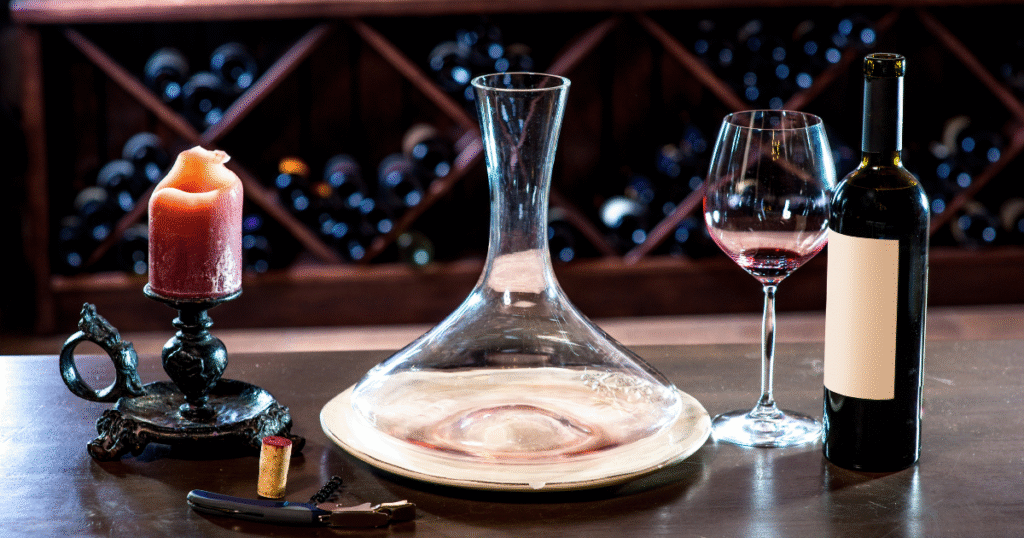
- Ideal shape and size: A wide-base decanter works best for young, tannic wines, while a narrow-necked one suits mature vintages that need minimal exposure. Choose a shape that feels both elegant and functional.
- Cleaning and drying tips: Avoid soaps with fragrance and use decanter brushes or steel cleaning beads for tricky spots. Rinse thoroughly and let it air-dry upside down to prevent streaks.
- Storage and maintenance: Keep your decanter dust-free and upright when not in use. A clean, well-kept decanter ensures every future pour tastes exactly as intended.
- Budget and premium recommendations: You don’t need to spend a fortune to decant beautifully. Affordable glass decanters work well for everyday wines, while crystal models make striking centerpieces for formal dining.
- Alternatives when you don’t own one: No decanter? Use a clean glass pitcher, a large bowl, or pour the wine back and forth between two containers. The goal is oxygen contact, not perfection.
Serving and Pairing Tips
- Best glassware for decanted wine: Choose glasses that taper slightly at the rim to capture aromas. A quality glass can make as much difference as decanting itself.
- Ideal serving temperature: Serve reds slightly cooler than room temperature (around 60–65°F) and whites just above fridge temperature (45–50°F). Proper temperature balance highlights structure and nuance.
- How decanting affects food pairing: Decanted wines often become more flexible with food. Tannic reds soften enough to pair with delicate meats, while fruity notes grow richer alongside aged cheeses.
- Hosting and presentation tips: When entertaining, decant in view of your guests. The slow pour under candlelight creates a sense of occasion and adds warmth to the moment. It’s not just about the wine; it’s about the shared experience.
Elevating the Wine Experience
Decanting is both science and art. It’s a way to honor what the winemaker started and to bring the story to life at your table. Whether you’re preparing a cherished vintage or opening something spontaneous, each decant tells you something new about the bottle, and about yourself as a taster. The more you practice, the more intuitive it becomes. At the end of the day, the best decanting method is the one that deepens your connection with the wine you love.
We believe that every pour deserves attention, every glass deserves care, and every bottle holds the potential for wonder, and that’s exactly why we celebrate the ritual of decanting at Wine-n-Gear.