Is It Acceptable to Put Ice in Wine? The Truth Most Wine Guides Won’t Tell You

Adding ice to wine is acceptable, especially for casual drinking or hot weather, as it cools the wine quickly and makes it more refreshing. It works best with light, fruity, or sparkling wines that can handle slight dilution, while complex, full-bodied, or aged wines should be avoided because ice can mute aromas, weaken structure, and reduce overall flavor clarity.
Once considered improper, this practice has become far more accepted in modern wine culture. Traditional etiquette still discourages it due to its effect on balance and nuance, but today’s approach prioritizes enjoyment, climate, and personal preference, making ice a practical choice when paired with the right style of wine.
Key Takeaways
- Ice in wine is widely acceptable in casual settings, warm climates, and outdoor occasions where maintaining a cool temperature is difficult
- It works best with light-bodied, high-acidity, or slightly sweet wines such as Sauvignon Blanc, Pinot Grigio, rosé, and sparkling wines
- Adding ice lowers temperature instantly but also dilutes alcohol, acidity, and flavor concentration over time
- Full-bodied, tannic, or aged wines should not be served with ice because it disrupts structure and masks complexity
- Alternatives like frozen grapes, stainless steel wine cubes, or rapid chilling methods can cool wine without dilution
Why People Put Ice in Wine

People add ice to wine to adapt it to real-life drinking conditions rather than ideal serving environments.
Wine is highly sensitive to temperature, and in warm climates or outdoor settings, it can rise above its optimal range within minutes. When this happens, alcohol becomes more pronounced, acidity feels flatter, and the wine loses its refreshing quality. Ice acts as an immediate solution.
In regions like southern France, this approach is normalized through la piscine, where rosé is intentionally served over ice during hot summer days. This is not seen as a compromise, but as a stylistic choice that enhances drinkability.
Beyond tradition, there are practical reasons why ice is used:
- Rapid cooling: Instantly brings wine closer to its ideal serving temperature
- Increased refreshment: Makes wine feel lighter, crisper, and more thirst-quenching
- Alcohol moderation: Slight dilution can soften wines that feel too strong or sharp
- Casual enjoyment: Aligns wine with relaxed, social settings rather than formal tasting conditions
In many ways, adding ice reflects a shift from rigid rules to experience-driven consumption.
What Happens When You Add Ice
Adding ice changes wine through two interacting processes: temperature reduction and dilution.
As the temperature drops, the volatility of aromatic compounds decreases. This means fewer aromas reach the nose, which can make the wine seem less expressive. At the same time, cooler temperatures reduce the perception of alcohol, making the wine feel smoother and more refreshing.
As the ice melts, dilution begins:
- Alcohol concentration decreases
- Acidity becomes less sharp
- Flavors become lighter and less defined
For simple, fruit-forward wines, this can actually improve balance, especially if the wine initially feels too warm or intense.
For complex wines, however, dilution breaks down structure. Tannins, acidity, and layered aromas lose their integration, resulting in a flatter, less cohesive experience.
This is why ice is not inherently good or bad. Its effect depends entirely on the type of wine and the context in which it is used.
Is It Rude or Wrong?
Putting ice in wine is not inherently wrong. It is context-dependent.
In formal environments such as wine tastings, fine dining, or professional evaluations, ice is discouraged because the goal is to experience the wine exactly as intended by the producer. Temperature, balance, and structure are carefully calibrated, and ice interferes with that precision.
In casual settings, the expectations are different. The focus shifts from analysis to enjoyment.
Modern wine culture increasingly reflects this shift:
- Less emphasis on strict etiquette
- Greater acceptance of personal preference
- Recognition of climate and environment as key factors
Even within the industry, many professionals acknowledge that outside formal settings, flexibility is reasonable. The idea that there is only one correct way to drink wine is gradually fading.
Best Wines to Drink with Ice

| Wine Type | Ice Recommended? | Why It Works |
| Sauvignon Blanc | Yes | High acidity maintains freshness even with dilution |
| Pinot Grigio | Yes | Light body and subtle flavors remain clean and crisp |
| Rosé | Yes | Designed for refreshment and performs well when chilled further |
| Prosecco | Yes | Effervescence and fruitiness hold up with ice |
| Off-dry whites | Yes | Residual sugar balances dilution and maintains flavor |
Certain wines are structurally better suited to handle the effects of ice. These wines typically have high acidity, bright fruit, or slight sweetness, which helps them remain balanced even when diluted. These wines are naturally refreshing and resilient. When ice is added, they tend to become more approachable rather than diminished.
In contrast to heavier wines, their structure does not rely heavily on tannins or complex aromatic layers, which makes them more adaptable to temperature shifts and slight dilution.
Wines You Should Avoid Putting Ice In
Some wines lose their identity when ice is added because their structure depends on precision, concentration, and temperature balance.
| Wine Type | Ice Recommended? | Why to Avoid |
| Cabernet Sauvignon | No | Tannins become harsh and unbalanced when diluted |
| Syrah | No | Loses body and depth as structure weakens |
| Aged wines | No | Fragile, developed aromas fade quickly when chilled |
| Premium terroir wines | No | Subtle complexity and site expression are diminished |
These wines rely on warmth, texture, and layered aromas to deliver their full experience.
Full-bodied reds like Cabernet Sauvignon and Syrah are built around tannins and alcohol structure. When ice lowers temperature and introduces dilution, tannins can feel sharper or disjointed, while fruit becomes muted.
Aged wines are even more sensitive. Their value lies in delicate, evolved aromas such as dried fruit, earth, or spice. These compounds are easily suppressed by cold and diluted by melting ice, often disappearing within minutes.
Terroir-driven wines, which express a specific vineyard or region, depend on nuance. Ice removes those subtle distinctions, flattening the wine into something far less expressive.
In short, these wines are designed for controlled serving conditions, not modification.
The Science of Temperature and Flavor
Wine is one of the most temperature-sensitive beverages, and even small shifts can significantly change how it is perceived.
Key principles include:
- Cold reduces aroma intensity by slowing the release of volatile compounds
- Warm temperatures increase alcohol perception, making wine feel heavier or “hot”
- Balance shifts with temperature, affecting how acidity, sweetness, and tannins interact
Each wine style has an ideal serving range:
- Sparkling and light whites: ~6–10°C
- Rosé: ~8–12°C
- Light reds: ~12–14°C
- Full-bodied reds: ~15–18°C
Adding ice often pushes wine below these optimal ranges, especially in the first few minutes. This can mute aromatics and compress the flavor profile.
At the same time, dilution reduces intensity. The result is a trade-off:
- For simple wines: improved refreshment and drinkability
- For structured wines: loss of complexity and balance
Understanding this trade-off is key to using ice effectively rather than randomly.
How to Add Ice Without Ruining Your Wine
If you decide to use ice, small adjustments in technique can significantly improve the outcome.
Use more ice, not less
A fuller glass of ice melts more slowly because the cubes insulate each other. This reduces rapid dilution and keeps the temperature more stable over time.
Use filtered or high-quality ice
Ice made from tap water can introduce off-flavors, especially in delicate wines. Clean, neutral ice preserves the original taste.
Add ice just before drinking
Timing matters. Adding ice too early allows unnecessary dilution before you even take the first sip.
Choose larger glassware
Larger glasses allow better airflow and slower melting. They also give you more control over how the wine evolves as it chills.
Avoid stirring excessively
Agitation accelerates melting. Let the wine settle naturally to maintain balance longer.
Pro Tip
A full glass of ice creates a more stable temperature and melts slower than a few cubes, helping preserve flavor and reduce dilution.
Better Alternatives to Ice (No Dilution)
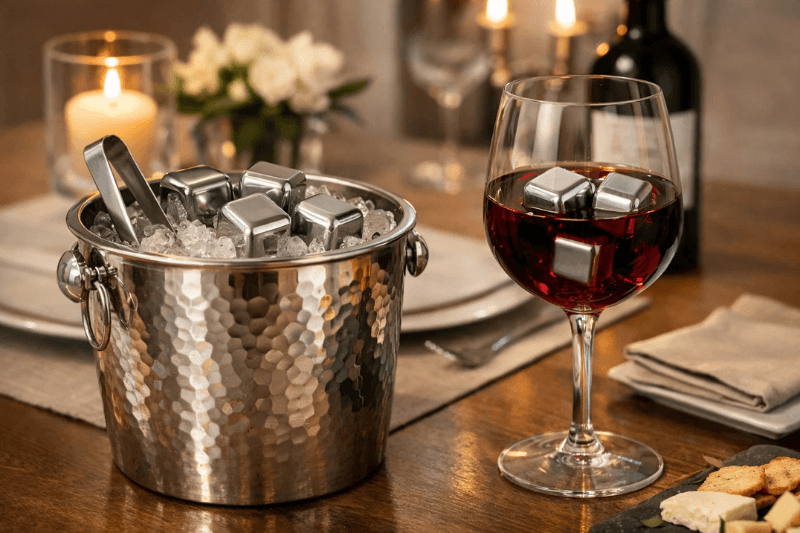
If your goal is to chill wine without altering its composition, several alternatives offer better control.
Frozen grapes
Frozen grapes act as natural, flavor-compatible “ice cubes.” They chill the wine gently while adding a subtle fruit note rather than watering it down.
Stainless steel wine cubes
These reusable cubes are designed to retain cold temperatures without melting. They are ideal for preserving structure in higher-quality wines.
Freezer towel method
Wrapping a bottle in a wet towel and placing it in the freezer for 15 minutes accelerates cooling through evaporation. This is one of the fastest and most effective pre-serving techniques.
Ice spheres
Compared to standard cubes, ice spheres have less surface area relative to volume, which means they melt more slowly and reduce dilution.
Pre-chilled glassware
Storing wine glasses in the fridge or freezer before serving can lower the wine’s temperature without direct dilution.
Pro Tip
Frozen grapes provide one of the simplest and most effective ways to chill wine while preserving its original flavor, structure, and balance.
The Rise of Ice in Wine Culture
Wine consumption is steadily shifting toward practical enjoyment, flexibility, and real-world conditions rather than rigid adherence to tradition.
This change is not random. It reflects how, where, and why people actually drink wine today.
Climate and environment are reshaping habits
In warmer regions and outdoor settings, wine can move out of its ideal serving temperature within minutes. As it warms, alcohol becomes more pronounced, acidity softens, and the wine can feel heavy or unbalanced.
Ice offers an immediate correction. Instead of letting the wine degrade, it keeps it within a refreshing range, even if that means a slight trade-off in concentration.
Wine is becoming more casual and social
Wine is no longer confined to formal dining or structured tastings. It is now part of everyday experiences such as:
- Beach days
- Poolside gatherings
- Outdoor dining
- Informal social occasions
In these contexts, drinkability and refreshment take priority over precision. Ice aligns naturally with this shift.
Producers are responding to consumer behavior
Some winemakers and brands are intentionally crafting wines that perform well over ice. These wines are typically designed with:
- Brighter acidity to maintain freshness
- More pronounced fruit to withstand dilution
- Softer structure to remain balanced when chilled further
This reflects a broader industry acknowledgment that wine should adapt to how people actually consume it.
Tradition is becoming more flexible
Historically, wine etiquette discouraged any modification that altered a wine’s intended profile. Today, that perspective is softening.
Even within professional circles, there is growing recognition that:
- Context matters more than strict rules
- Not every wine is meant to be analyzed
- Enjoyment is a valid goal on its own
In many coastal and tropical regions, adding ice is no longer seen as controversial. It is simply a practical response to climate and lifestyle, not a rejection of quality.
Common Myths About Ice in Wine

Many beliefs about ice in wine come from outdated assumptions rather than actual experience.
“Ice ruins all wine”
Ice does not universally ruin wine. It changes it. For structured, complex wines, that change is usually negative. For light, high-acid wines, it can make them more refreshing and easier to drink, especially in warm conditions.
“Serious wine drinkers never use ice”
This idea reflects an older, more rigid view of wine culture. In reality, many knowledgeable drinkers adjust how they serve wine depending on the situation. Informal settings often call for flexibility.
“Colder is always better”
Temperature is a tool, not a solution. While cooler wine can feel more refreshing, excessive cold suppresses aromas and reduces flavor complexity. The goal is balance, not maximum chill.
“Ice is only for cheap wine”
While simpler wines are generally better suited for ice, quality is not the defining factor. Structure matters more than price. Some well-made wines are intentionally designed to remain enjoyable even when diluted slightly.
FAQs
Does ice ruin wine?
Ice does not automatically ruin wine, but it does change it. As the ice melts, it dilutes the wine, lowering alcohol, acidity, and flavor intensity. At the same time, colder temperatures suppress aromas, which can make the wine seem less expressive. For light, crisp, and fruit-forward wines, this trade-off can actually improve refreshment and balance. For complex or structured wines, however, it can flatten the profile and reduce depth.
Can you put ice in red wine?
You can put ice in red wine, but it is generally not recommended for full-bodied styles like Cabernet Sauvignon or Syrah. These wines rely on tannins, warmth, and concentration to deliver structure and balance, which ice can disrupt. Lighter reds such as Pinot Noir or Gamay can handle slight chilling better, but even then, controlled cooling methods are usually a better option than direct ice.
Is ice in wine bad etiquette?
Ice in wine is only considered poor etiquette in formal settings such as wine tastings, fine dining, or professional evaluations, where the goal is to experience the wine exactly as intended. In casual environments, there are no strict rules, and adding ice is widely accepted. Modern wine culture places more emphasis on enjoyment and context rather than rigid traditions.
What is the fastest way to chill wine?
The wet towel freezer method is one of the fastest and most effective ways to chill wine without dilution. Wrapping the bottle in a damp towel and placing it in the freezer accelerates heat transfer, allowing the wine to cool evenly in about 15 minutes. Other quick methods include using an ice water bath with salt, which chills wine faster than ice alone.
Why do people put ice in wine?
People add ice to wine to quickly lower its temperature and make it more refreshing, especially in warm climates or outdoor settings. It can also soften strong alcohol or sharp acidity, making the wine feel smoother and easier to drink. In many cases, it is simply a practical choice that prioritizes comfort and enjoyment over traditional serving rules.
Final Verdict: Should You Put Ice in Wine?
Putting ice in wine is not a mistake. It is a deliberate choice based on context, wine style, and personal preference.
For light, uncomplicated wines in warm conditions, ice can enhance drinkability, making the wine feel fresher, lighter, and more enjoyable. In these cases, the slight dilution is often a worthwhile trade-off.
For complex, aged, or full-bodied wines, ice works against the structure. It suppresses aroma, disrupts balance, and removes the layers that define the wine.
The most effective approach is simple:
- Use ice when the goal is refreshment
- Avoid ice when the goal is expression and complexity
Wine does not need to follow a single set of rules to be enjoyed properly. The best experience comes from understanding how different choices affect the glass, then adapting based on the moment, the environment, and the wine itself.
At Wine-n-Gear, we believe wine should fit your lifestyle, not strict rules. Whether you prefer it perfectly chilled, over ice, or straight from the bottle, the best way to enjoy wine is the way that works for you. Explore our guides, tools, and accessories designed to elevate every sip, wherever and however you drink.