Top 5 Wine-Producing Countries: Italy, France, Spain, USA and Chile
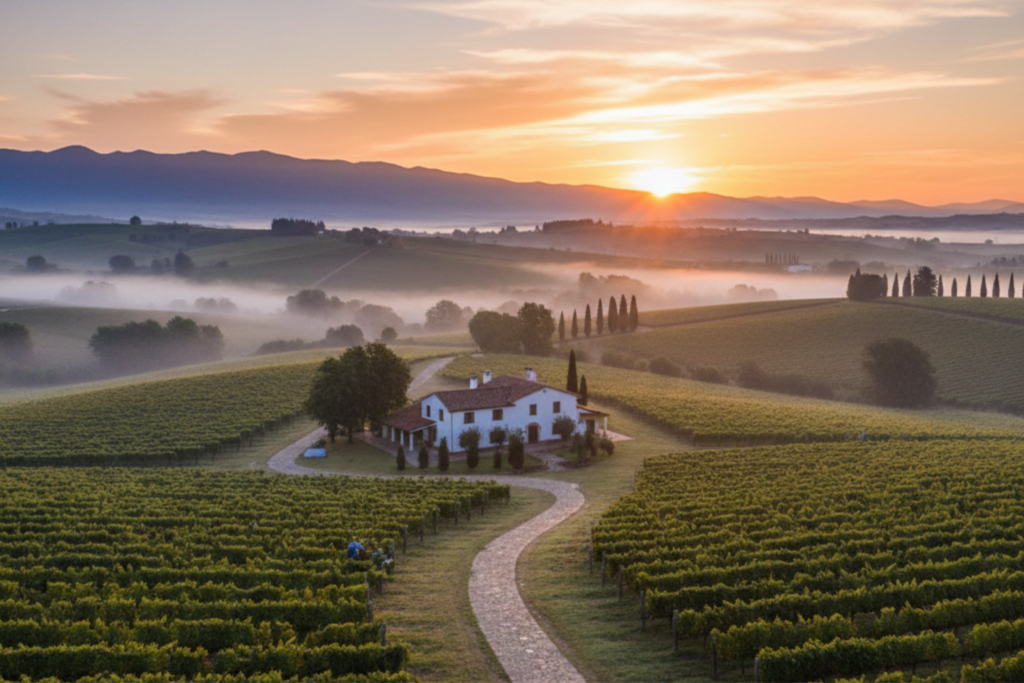
Wine production is both agricultural output and cultural identity. It sits at the intersection of climate, soil management, government regulation, trade flows, tourism, and consumer perception. While remains deeply tied to its ancestral European origins, global production has evolved into a competitive and diversified industry where both traditional and modern regions exert influence.
Wine-producing countries can be understood through three lenses:
- Countries that produce the most wine by volume
- Countries that export the most wine by value or by volume
- Countries that shape consumer preference and premiumization trends
These categories rarely overlap perfectly. For example, Spain has among the highest vineyard surface areas in the world but lower export value per liter than France or Italy. The United States consumes far more wine than it exports, affecting global trade rankings. China remains a top producer by volume yet maintains relatively modest export presence due to domestic consumption absorption.
Global wine supply continues to be affected by shifting climatic conditions, evolving consumer habits, and regulatory frameworks. Younger consumers in the United States and Asia are driving demand for premium, sustainable, and diverse wine profiles, while established Old World regions rely on centuries of viticulture, appellation systems, and brand heritage.
Major Wine-Producing Countries: Profiles, Regions, and Growth Dynamics
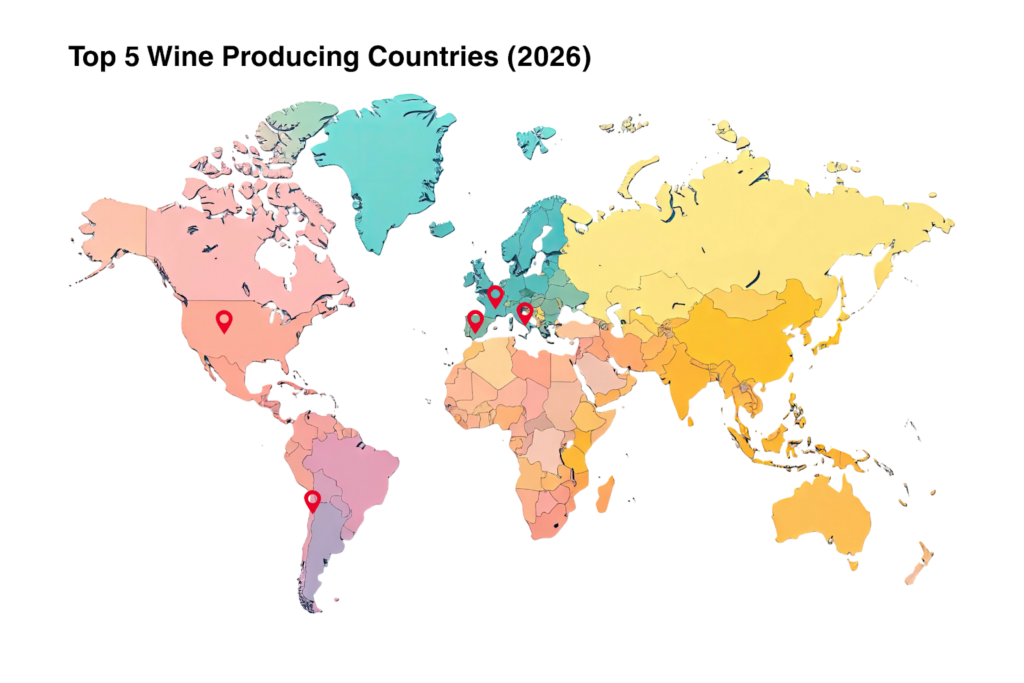
Below are the top wine-producing countries with detailed breakdowns of their regions, grape varieties, trade patterns, and competitive strengths.
1. ITALY
- Italy is the world’s largest wine-producing country and offers the most diverse range of native grape varieties and regional styles.
- Italy’s major production regions include Veneto, Tuscany, and Piedmont, with dominant export categories such as Prosecco, Chianti, and Barolo.
Italy frequently occupies the top global position in annual wine production, benefiting from a combination of climate diversity, long-standing viticulture, and regionally protected appellations. Italy also offers unmatched biodiversity in native grape varieties, with estimates surpassing 350 recognized cultivars and several hundred additional local variants.
Major Wine Regions
Key Italian regions include:
- Veneto
- Tuscany
- Piedmont
- Emilia-Romagna
- Lombardy
- Sicily
- Puglia
- Trentino-Alto Adige
- Friuli-Venezia Giulia
Veneto has surged in international visibility due to the global success of Prosecco and the strength of DOC-designated sparkling wine exports.
Tuscany provides some of Italy’s most prestigious DOCG-level wines including Chianti Classico and Brunello di Montalcino, while Piedmont hosts iconic Nebbiolo-based appellations such as Barolo and Barbaresco.
Grape Varieties and Styles
Leading Italian varieties include:
- Sangiovese
- Nebbiolo
- Barbera
- Montepulciano
- Corvina
- Trebbiano
- Pinot Grigio
- Glera (used in Prosecco)
Italy excels across all style categories including sparkling, red, white, dessert, and fortified wines, giving it global versatility.
Export Profile and Competitive Position
Italy is a top exporter both by volume and by value. Prosecco has become one of the most successful sparkling wine exports worldwide, challenging Champagne in accessibility and price positioning. Italy benefits from:
- Strong tourism demand
- Culinary synergy with global cuisine
- Premium tier heritage wines
- High production capacity
Italy maintains strong domestic consumption while also supporting a diversified export market across Europe, North America, and Asia.
Recent Trends
- Continued Prosecco expansion
- Premiumization in Barolo and Brunello markets
- Growing organic and biodynamic certification in Tuscany and the North
- Climate-driven adjustments in southern regions like Sicily and Puglia
- Increasing international interest in native grapes like Verdicchio, Fiano, and Aglianico
2. FRANCE
- France is the second largest wine-producing country in the world and the global leader in premium and luxury wine value.
- Major French regions include Bordeaux, Burgundy, Champagne, the Rhône Valley, Alsace, and Provence, each driving distinctive global category leadership.
France remains the most influential wine nation in terms of prestige, brand equity, global terminology, and appellation models. Many foundational wine concepts such as terroir, appellation d’origine contrôlée, and méthode traditionnelle originated or were codified in France.
While Italy may outproduce France in volume, France outperforms every country in export value due to premium category dominance, especially in Bordeaux classified growths, Burgundy grands crus, and Champagne houses.
Major Wine Regions
Key French regions include:
- Bordeaux
- Burgundy
- Champagne
- Rhône Valley (Northern and Southern)
- Loire Valley
- Alsace
- Provence
- Languedoc-Roussillon
- Jura and Savoie
Bordeaux and Burgundy remain global benchmarks for Cabernet Sauvignon, Merlot, and Pinot Noir. Champagne retains dominance in traditional method sparkling wine. Provence sets global stylistic trends for rosé production, influencing both Old and New World styles.
Grape Varieties and Styles
Core French varietals include:
- Cabernet Sauvignon
- Merlot
- Pinot Noir
- Syrah
- Grenache
- Chardonnay
- Sauvignon Blanc
- Chenin Blanc
- Riesling
- Muscat
France spans categories from sparkling to still, rosé, dessert, fortified, and natural sweet wines. Loire Chenin Blanc and Bordeaux blends continue to perform strongly in premium export markets.
Export Profile and Competitive Position
France leads global wine export value by substantial margin. Key advantages include:
- Brand prestige and origin identity
- Historic classification systems
- Luxury wine investment markets
- Global tourism
- Protected GI frameworks
Champagne remains a dominant trade category and a status symbol in Asia, Europe, and North America. Fine Bordeaux and Burgundy participate in financialized markets including futures and investment portfolios.
Recent Trends
- Burgundy scarcity driving price elevation
- Champagne diversification into lower dosage styles
- Loire Valley global resurgence
- Climate change creating riper vintages across multiple regions
- Provence rosé premiumization in lifestyle markets
French producers are adjusting to warmer climates with canopy management, higher altitude cultivation, and experimental varietal trials in southern zones.
3. SPAIN
- Spain ranks among the world’s top wine-producing countries and has the largest vineyard surface area of any nation.
- Major regions include Rioja, Ribera del Duero, Priorat, Rías Baixas, and Cava-producing zones in Catalunya.
Spain has cultivated vines since antiquity but modernized its technical winemaking and international marketing considerably during the late 20th century. While Spain’s vineyard land is vast, output per hectare is lower due to dry-farming tradition and climate conditions, which partially explains the gap between vineyard area leadership and production volume rankings.
Major Wine Regions
Prominent Spanish regions include:
- Rioja
- Ribera del Duero
- Priorat
- Rueda
- Rías Baixas
- Catalunya (including Penedès for Cava)
- Navarra
- La Mancha
- Jerez (for Sherry)
Rioja continues to represent Spain internationally with structured Tempranillo-based reds. Ribera del Duero produces powerful styles appealing to premium red wine consumers. Rías Baixas is globally recognized for Albariño and fresh coastal whites.
Grape Varieties and Styles
Key Spanish grapes include:
- Tempranillo
- Garnacha
- Monastrell (Mourvèdre)
- Albariño
- Verdejo
- Palomino (used in Sherry)
- Macabeo, Parellada, Xarel-lo (for Cava)
Spain is especially notable for:
- Long barrel aging traditions
- Premium red wines with structure and longevity
- High-quality sparkling wines (Cava)
- Unique fortified wines (Sherry)
- Trend-forward lighter reds and whites for modern drinkers
Export Profile and Competitive Position
Spain exports heavily in both bulk and bottled categories. Competitive strengths include:
- Attractive value-to-quality ratios
- Strong gastronomic tourism
- Versatile export positioning from value to premium
However, Spain’s export value per liter remains below Italy and France, reflecting international pricing structure differences.
Recent Trends
- Premiumization of Rioja and Priorat
- Cava improving appellation segmentation and brand distinction
- Albariño gaining strong US and UK traction
- Revitalization of old bush vineyards in Aragón and Castilla
- Climate adaptations in dry interior zones
Spain is benefiting from global demand for Mediterranean cuisine and food-pairing friendly wines.
4. UNITED STATES
- The United States is the leading New World wine producer, with California accounting for the vast majority of national production.
- The US leads global wine consumption and emphasizes premium and luxury categories in both domestic and export markets.
The United States ranks fourth globally in wine production volume but plays an outsized role in global consumption, retail innovation, and premiumization. The US wine industry is heavily consumer-oriented and market-driven, with brand building and direct-to-consumer sales playing critical roles.
Major Wine Regions
Primary US wine regions include:
- California (dominant)
- Oregon
- Washington
- New York
- Virginia
- Texas
California’s Napa Valley, Sonoma County, Paso Robles, and Santa Barbara County are internationally recognized. Oregon is renowned for Pinot Noir and cool-climate Chardonnay. Washington excels in Cabernet Sauvignon, Syrah, and Bordeaux blends.
Grape Varieties and Styles
Major US grapes include:
- Cabernet Sauvignon
- Chardonnay
- Pinot Noir
- Merlot
- Zinfandel
- Syrah
- Sauvignon Blanc
The United States excels in:
- Bold, fruit-forward red wines
- High-end Cabernet-based blends
- Blanc de blancs sparkling wines in California
- Dry rosé expansions influenced by Provence
Export Profile and Competitive Position
The US consumes the most wine of any country by total volume. Exports exist but remain secondary to domestic demand. Napa has positioned itself as a global luxury competitor alongside Bordeaux and Burgundy in investment and collector markets.
Innovations include:
- Direct-to-consumer club models
- Wine tourism infrastructure
- Digital retail and subscription services
- Alternative packaging and RTD formats
Recent Trends
- Premium growth despite overall volume fluctuations
- Younger consumer shifts toward lighter styles and natural wine
- Innovation in canned, low-alcohol, and hybrid beverages
- Advanced climate research in coastal and high-altitude vineyards
The US wine industry illustrates how consumer preference can reshape product categories and trade patterns.
5. CHILE
- Chile is a major wine exporter with competitive value-to-quality ratios and strong presence in global retail markets for Cabernet Sauvignon, Merlot, and Carmenere.
Chile entered the global market strongly in the 1990s and early 2000s, leveraging trade openness and agricultural efficiency. The country benefits from a long, narrow geography with diverse microclimates influenced by the Andes and the Pacific.
Major Wine Regions
Key regions include:
- Maipo Valley
- Colchagua Valley
- Maulé Valley
- Casablanca Valley
- Aconcagua Valley
- Itata and Bio-Bio (southern regions)
Colchagua specializes in structured red wines, while Casablanca produces Chile’s best Sauvignon Blanc and Chardonnay expressions.
Varieties and Styles
Leading grapes:
- Cabernet Sauvignon
- Merlot
- Carmenere (national identity variety)
- Sauvignon Blanc
- Chardonnay
- Syrah
Carmenere emerged as a signature grape after being identified as distinct from Merlot in the 1990s, providing Chile with a unique marketing story.
Recent Trends
- Premiumization through mountain and coastal sites
- Dry-farmed old vines in the south gaining attention
- Increased sustainability certifications
- Export diversification
Chile reflects how agricultural modernization and trade policies can elevate a national wine sector.
Old World vs New World Dynamics
The top five wine-producing countries fall into two distinct geographical and stylistic groupings that the industry commonly refers to as the Old World and the New World. These categories help explain differences in viticulture, regulation, winemaking philosophy, export orientation, and consumer communication, all of which influence how wines are perceived and purchased globally.
Old World Producers: Italy, France, Spain
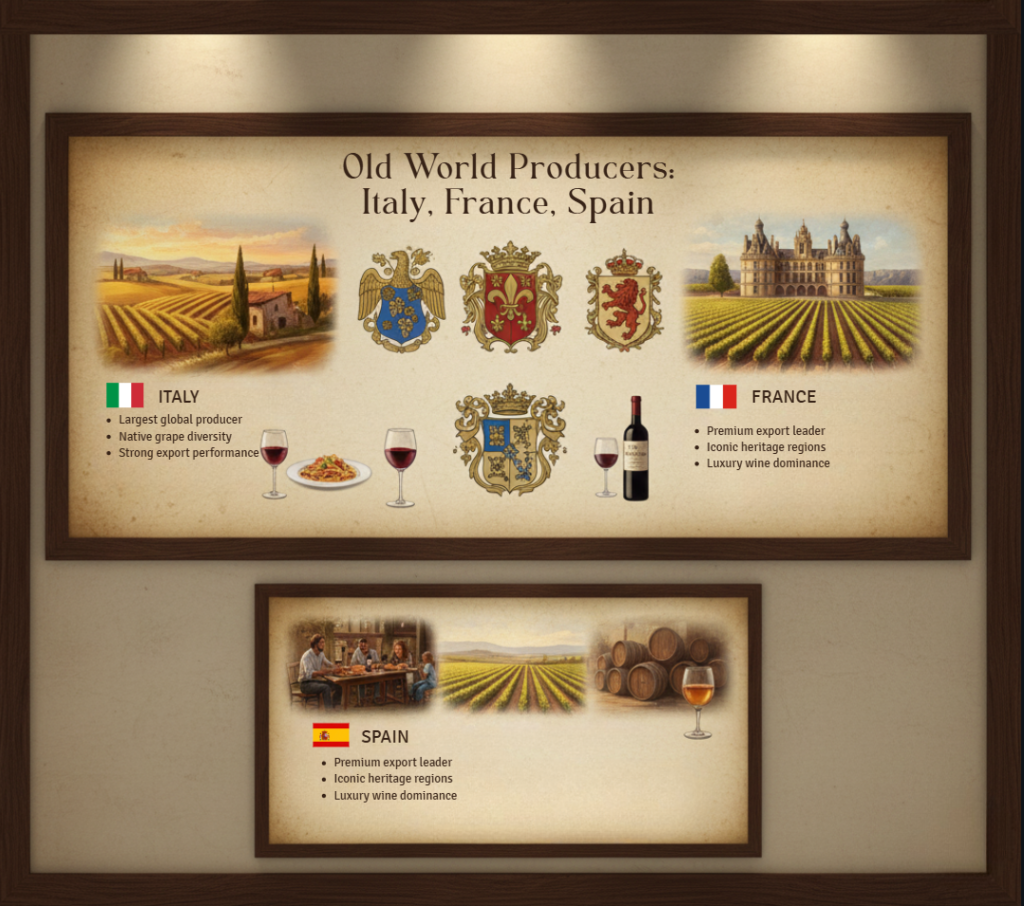
Old World wine countries are rooted in centuries of viticultural history and cultural traditions. Their winemaking is heavily shaped by geography and climate, and the concept of terroir is central to both production and marketing. Wines are typically defined by origin rather than grape variety, and appellation laws play a major role in controlling yields, permitted grape varieties, winemaking techniques, and labeling conventions.
Old World wines often emphasize:
- Tradition and historical continuity
- Geographic origin and appellation systems
- Terroir and microclimate expression
- Lower alcohol levels and higher natural acidity
- Food pairing compatibility
- Longer maturation potential in top tiers
- Cultural integration with cuisine and regional identity
The Old World also pioneered many of the regulatory frameworks that now inform global wine labeling practices. Naming systems such as DOCG in Italy, AOC in France and DO in Spain are source identifiers that shape both quality perception and export pricing.
New World Producers: United States, Chile
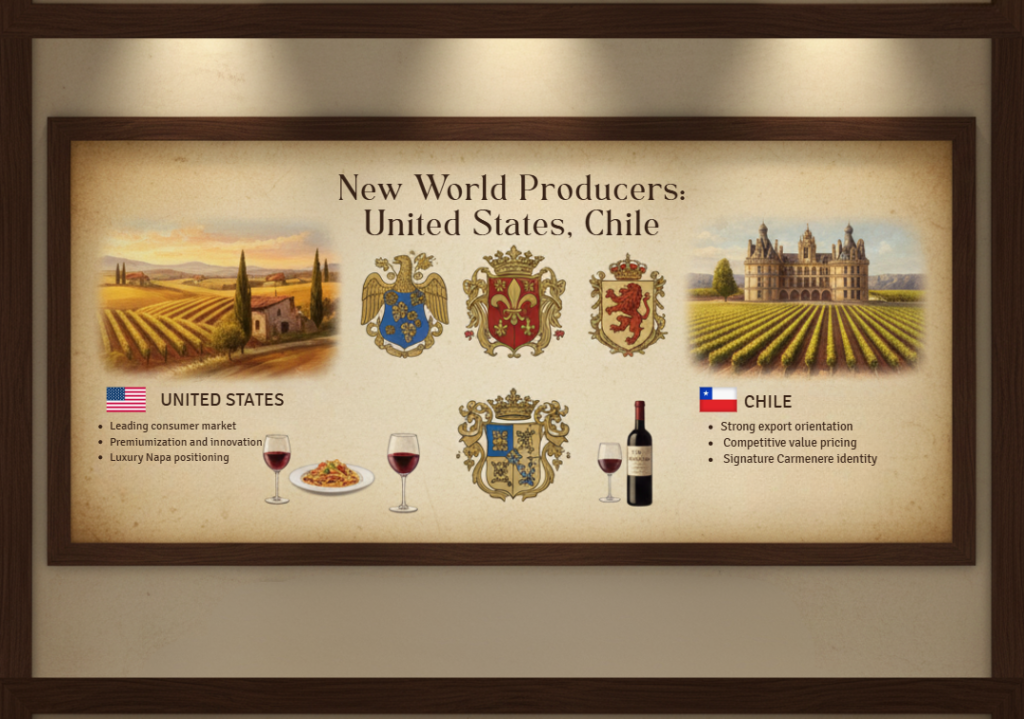
New World wine regions developed their modern wine identity more recently and tend to prioritize innovation, technology, and consumer-friendly communication. Because they are less bound by historical restrictions, New World winemakers often experiment with grape varieties, blends, fermentation methods, vineyard management, and branding approaches.
New World wines often emphasize:
- Innovation and modern viticulture
- Varietal labeling for clarity and marketing
- Fruit-forward flavor profiles
- Higher alcohol levels due to warmer climates
- Consumer orientation and brand storytelling
- Market segmentation by price tier
- Export competitiveness and retail presence
The New World is also more likely to invest in advanced tools such as precision irrigation, canopy control strategies, optical sorting, temperature-controlled fermentations, and vineyard data analytics, all of which support consistency at scale.
Old World vs New World: Comparative Table
| Dimension | Old World (Italy, France, Spain) | New World (USA, Chile) |
| Regulatory Framework | Strict appellation systems regulate grape varieties, yields, and production methods | Flexible viticulture with fewer restrictions and broader winemaking allowances |
| Labeling Conventions | Region-based naming (appellation as primary identity) | Varietal-based naming that simplifies consumer understanding |
| Consumer Accessibility | Requires knowledge of regions and producers to decode style | Easier to understand for new and casual consumers due to clear varietal labeling |
| Market Orientation | Heritage-driven, tradition-oriented, reputation built over centuries | Market-driven, innovation-oriented, responsive to consumer trends |
| Sales Channels | Strong in restaurants, wine education, hospitality, and collector markets | Strong in retail chains, supermarkets, e-commerce, and direct-to-consumer |
| Branding Approach | Subtle branding, often region-first and producer-second | Brand-forward storytelling with emphasis on identity and differentiation |
| Export Strategy | Historically dominant through legacy trade routes and cultural influence | Competitive through pricing, supply consistency, and retailer alignment |
| Pricing Structure | Higher variation with strong premium and luxury tiers | Competitive mid-tier pricing with steady expansion into premium categories |
| Sensory Profile | Emphasizes acidity, tannin, minerality, subtlety, and food pairing integration | Emphasizes ripe fruit, richness, intensity, and tasting immediacy |
| Culinary Role | Designed around integration with regional cuisine and long meals | Designed for broader serving contexts including casual and social consumption |
| Cultural Narrative | Focus on terroir, history, and appellation identity | Focus on innovation, consumer experience, and accessibility |
| Climate Influence | Cooler average climates creating higher acids and lower alcohol | Warmer climates producing fuller body, higher alcohol, and softer tannins |
| Innovation Patterns | Tradition prioritized; changes occur slowly through regulation | Rapid adoption of new tech, farming techniques, and winemaking equipment |
| Competitive Strengths | Luxury segments (Bordeaux, Burgundy, Champagne, Barolo, Rioja) | Retail performance, varietal clarity, and supply reliability |
| Global Recognition | Iconic heritage brands recognized worldwide | Rising influence in global export markets and competitions |
| Primary Advantages | Prestige, longevity, authenticity, terroir expression | Consumer-friendly labeling, competitive pricing, adaptive marketing |
| Primary Challenges | Regulatory rigidity, climate stress, premium market dependency | Perception barriers in luxury segments, need for identity differentiation |
| Outcome of Dual Structure | Excels in premium value and cultural influence | Excels in innovation and market responsiveness |
Understanding How Global Wine Production Is Measured
Wine production can be measured in different ways, each emphasizing distinct industry realities:
- By volume: Measures liters or hectoliters produced annually. This ranking answers “Who makes the most wine?”
- By vineyard surface area: Measures land under vine. Spain has the world’s largest vineyard area despite not always being the top producer by volume.
- By export volume: Measures how much wine a country ships abroad. High-volume exporters often compete on price.
- By export value: Measures revenue generated from exports. France dominates here due to premium and luxury segments.
- By consumption: Shows domestic demand and cultural integration. The United States is the leading consumption market by total volume.
- By domestic consumption: Measures national wine demand and cultural integration. The United States leads global consumption by total volume.
- By vineyard surface area: Measures land under vine. Spain is the world leader in vineyard acreage despite lower yields per hectare.
These metrics reveal that wine is not merely agricultural output but a complex economic and cultural system.
Frequently Asked Questions
Which country produces the most wine?
Italy produces the most wine by volume among the top five wine-producing countries. Its output is supported by diverse climates, native grape biodiversity, and strong appellation systems. Veneto, Tuscany, and Piedmont play an especially important role in sustaining Italy’s production leadership.
Which country drinks the most wine?
The United States leads global wine consumption by total volume. High population size, broad retail distribution, and strong restaurant and tourism sectors contribute to sustained demand. Consumption growth also reflects expanding interest from younger drinkers and premium category buyers.
Which country exports the most wine by value?
France exports the most wine by value due to its dominant premium and luxury segments. Regions such as Champagne, Bordeaux, and Burgundy command higher prices in international markets. Fine wine investment and collector activity further elevate France’s export value performance.
Which country has the biggest vineyards?
Spain has the largest vineyard surface area in the world. Lower yields and dry-farming traditions help explain why its acreage does not always translate to the highest production volumes. Large vineyard holdings support a mix of red, white, sparkling, and fortified wine categories across multiple appellations.
Future Outlook for Global Wine Production

Italy, France, Spain, the United States, and Chile together shape global wine supply and influence the flavors, price tiers, and categories that consumers encounter. Old World producers maintain heritage leadership built on centuries of viticulture and appellation systems. New World producers continue to expand through innovation, tourism, premium positioning, and export-driven strategies. Climate patterns, shifting consumer preferences, and market sophistication will influence how these top five countries compete and collaborate in the next era of global wine production.
As wine consumption spreads into new cultural and geographic markets, consumers are also investing in the surrounding wine lifestyle. This includes high quality glassware, bottle openers, corkscrews, cooling accessories, and home service tools that elevate how wine is enjoyed at home or in social settings. At Wine-n-Gear, we offer a curated collection of wine accessories including corkscrews, wine openers, glassware, ice buckets, and other essentials that support the enjoyment of wine in both casual and premium settings.
Sources:
International Organisation of Vine and Wine. (n.d.). Country statistics. OIV.
World Population Review. (n.d.). Wine producing countries by production. World Population Review.