How to Properly Store Wine Glasses: Tips for Longevity & Shine
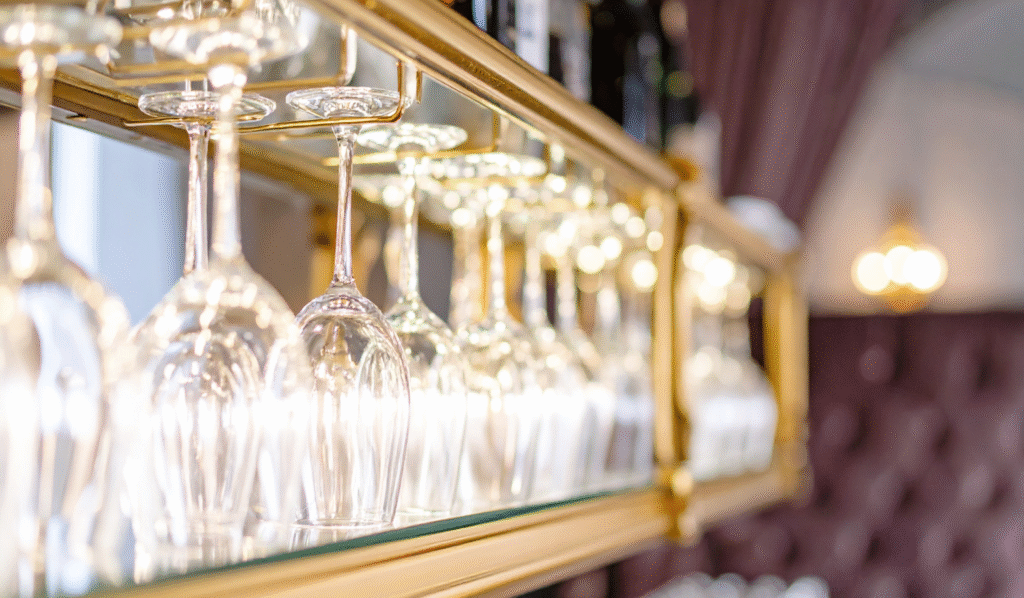
Wine glasses are delicate instruments designed to bring out the best in every pour. Their clarity allows you to appreciate color, their shape enhances aroma, and their fine rims elevate taste. But without proper storage, even the highest quality stemware can lose its sparkle, develop scratches, or break before its time. Learning how to properly store wine glasses protects more than just fragile crystal. It safeguards your investment, keeps every glass and piece of barware guest ready, and preserves the full sensory experience of wine.
The key is to store them upright in a clean, dust free cabinet or on a secure rack that prevents chipping and minimizes exposure to grease, vibrations, or direct sunlight. Alongside your favorite wine accessories such as decanters, stoppers, or aerators, the right storage practices ensure your barware collection stays pristine. Whether you own a small set for everyday dinners or a curated collection of varietal specific stemware, thoughtful storage will keep them shining and extend their life for years to come.
Key Takeaways:
- Store wine glasses upright in clean, dust-free cabinets to protect rims and preserve clarity.
- Avoid stacking and overcrowding, leaving space between each glass to prevent chips and scratches.
- Use shelf liners, dividers, or padded cases to reduce vibration and keep delicate crystal safe.
- Rinse with distilled water, dry with microfiber, and polish before storage for lasting shine.
- Choose storage based on use: cabinets for daily glasses, padded boxes for long-term or specialty crystal.
Storing Wine Glasses the Smart Way
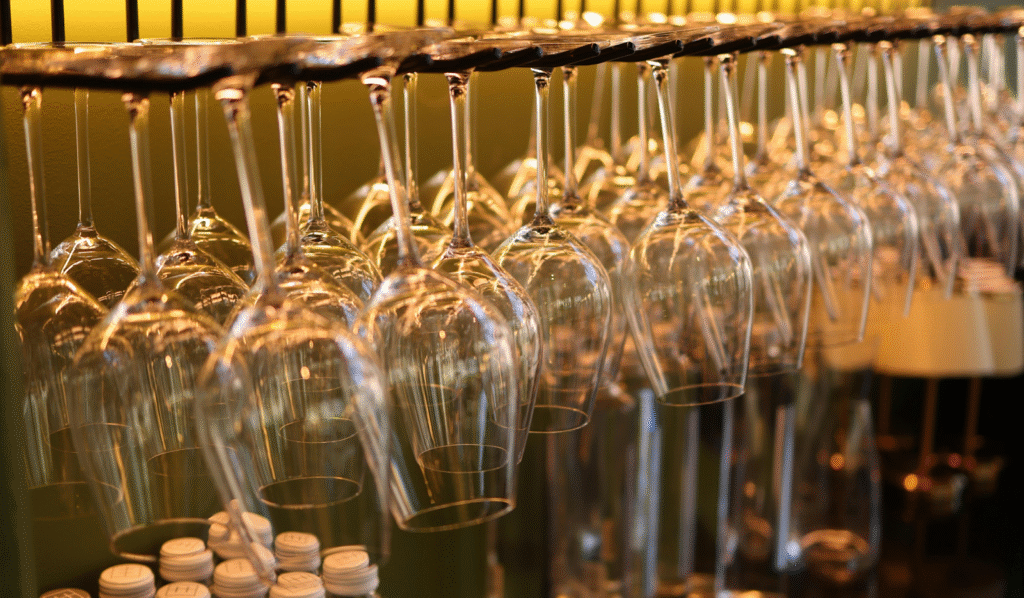
Proper storage is about more than simply finding a place to set your glasses down. The way you organize, protect, and access stemware affects both its longevity and its ability to showcase wine at its best. Choosing the right storage option depends on your space, lifestyle, and how often each type of glass is used.
Here are some comparisons of common wine glass storage options to help you decide which works best for your space, lifestyle, and collection.
Cabinet Storage vs Hanging Racks vs Open Shelving
Cabinets are often the safest choice, keeping glasses shielded from dust, grease, and direct sunlight. Deep shelves with stable bases prevent tipping, while adjustable shelving accommodates taller wine glasses and crystal pieces.
Hanging racks are space-savers and provide a striking way to display stemware. They work well in kitchens and home bars but expose glasses to airborne particles and kitchen grease, meaning more frequent cleaning. Open shelving makes glasses easy to reach but offers the least protection, requiring regular dusting to maintain clarity and shine.
Dedicated Bar Cart or Hutch Considerations
Bar carts are practical for entertaining, but stability should come first. Wheel locks, sturdy frames, and non-slip liners help prevent rattling and scratching when moving glasses from room to room.
Hutches or sideboards provide a more permanent solution, combining storage, protection, and display. Glass doors protect against dust while keeping your collection visible, making this option especially suitable for larger or mixed sets of stemware.
Short Term vs Long Term Storage Needs
Stemware used daily or weekly should be kept in easily accessible spots such as cabinets or racks. Accessibility matters most here, provided the storage environment is clean and stable.
Crystal or specialty glasses reserved for celebrations deserve a more protective approach. For long-term storage, use padded boxes or dividers that separate each piece. Wrapping glasses in microfiber pouches or acid-free tissue prevents scratches and helps preserve their clarity for years.
Correct Orientation for Storing Wine Glasses
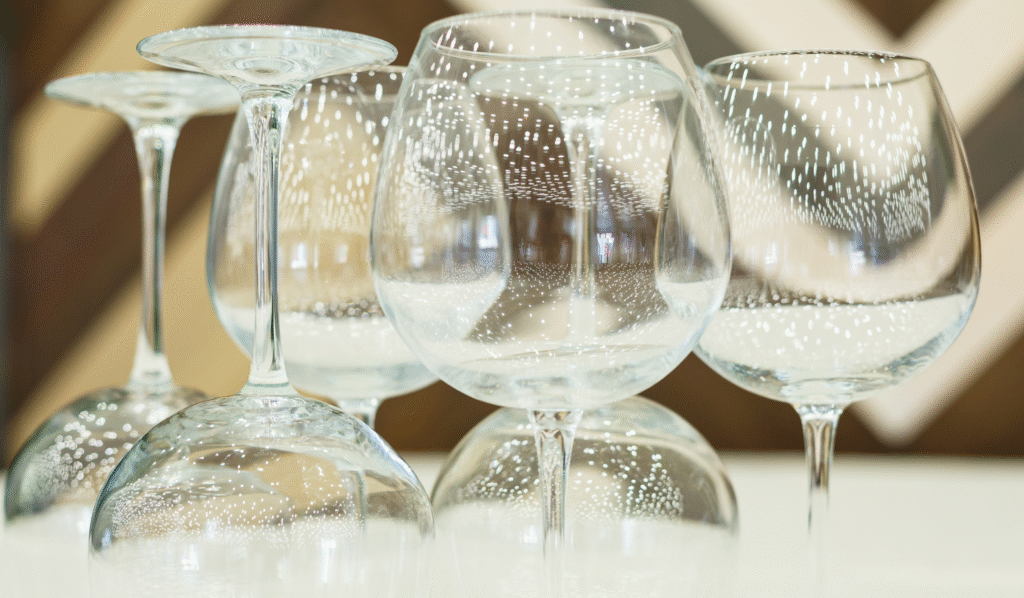
The position of your wine glasses in storage is more important than it may seem. Orientation affects not only how clean they stay but also how well they resist damage over time. Choosing between rim up or rim down has practical trade-offs, and understanding these differences helps you decide the safest method for your collection.
Rim Up or Rim Down Explained
The way you position wine glasses in storage makes a noticeable difference in how long they last. Storing them rim up is generally the safest approach, as it prevents delicate lips from bearing unnecessary weight or pressure. This reduces the risk of chips and hairline cracks that compromise both appearance and function. The drawback, however, is that dust and particles can easily settle inside the bowl, requiring more frequent rinsing before use.
Rim down may seem like a practical alternative to keep bowls dust-free, but it comes with its own risks. Placing glasses upside down transfers weight to the thinnest and most fragile part of the glass. If the surface is uneven or hard, the rims can become scratched or stressed, shortening the life of your stemware.
The Safe Compromise
For those who want the best of both approaches, protective barriers offer a reliable solution. Placing shelf liners, felt pads, or soft coasters beneath the base or rim provides a cushion that reduces friction and prevents scratches. These materials also add stability, ensuring glasses stay secure whether stored upright or rim down.
This method works particularly well for households with limited cabinet space or those who prefer rim-down storage for dust control. By using a buffer between the glass and the shelf, you protect against wear while still keeping stemware clean and ready for use.
Why Stacking Is Never Recommended

While stacking might look like a convenient way to save space, it is one of the fastest ways to damage stemware. The thin bowls and fragile stems are not designed to handle pressure from above. Even light stacking can create stress points that lead to cracks, fractures, or complete breakage over time.
Beyond structural risks, stacked glasses are also more prone to scratches when surfaces rub against one another. Instead of stacking, always allow each glass its own space, even if it means reducing the number you display in a cabinet or rack. Protecting them individually ensures their clarity and elegance last for years.
Tips for Space Planning and Protection of Wine Glasses
1. Measure Once and Map Shelf Heights for Different Bowl Shapes
Proper planning starts with understanding the dimensions of your collection. Tall Bordeaux glasses require significantly more vertical clearance than shallow coupes or narrow champagne flutes. Measuring once and adjusting shelf heights accordingly ensures each glass has the breathing room it needs. Not only does this prevent accidental tipping or scraping, but it also helps maintain the intended shape and clarity of the glass by reducing unnecessary handling.
Customizing storage in this way also creates a more organized system. Each type of stemware has a designated place, making it easier to access the right glass for the right wine without shuffling or overcrowding.
2. Spacing to Prevent Contact and Rattling
Spacing is just as important as vertical clearance. Allowing at least an inch between glasses minimizes the risk of contact when cabinets are opened or closed. Even a gentle clink can lead to small chips or scratches that weaken the glass over time.
Adequate spacing also reduces rattling caused by vibrations from closing cabinet doors or moving nearby items. This simple step adds years to the life of fragile stemware while keeping the collection pristine.
3. Shelf Liners and Non Slip Mats
Protective shelf liners or mats made of silicone, cork, or felt can transform a simple cabinet into a safe storage environment. These materials provide a cushioned base that absorbs vibration and prevents glasses from sliding when doors are opened or shelves are bumped.
Non-slip surfaces also guard against scratches on both the glass base and the shelving itself. For collectors who store expensive crystal or heirloom pieces, liners are a small but valuable investment in long-term preservation.
4. Dividers and Modular Inserts
Adjustable dividers or modular inserts create structure within storage areas, making it easier to manage mixed collections of stemware. By keeping bowls and stems from touching, they minimize the risk of scratches and breakage while maintaining a clean, organized look.
This approach works especially well for households with a wide variety of glasses from everyday tumblers to specialty varietal crystal. Modular inserts can be customized as collections grow, ensuring protection and flexibility over time.
Best Practices for Hanging Wine Glass Racks
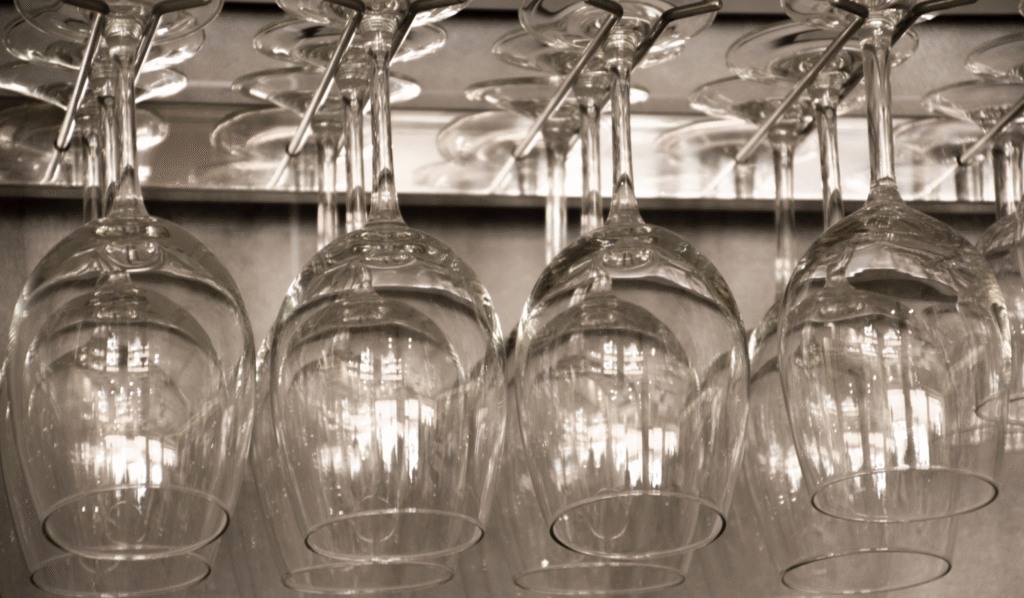
1. Selecting a Rack That Matches Base Diameter and Glass Weight
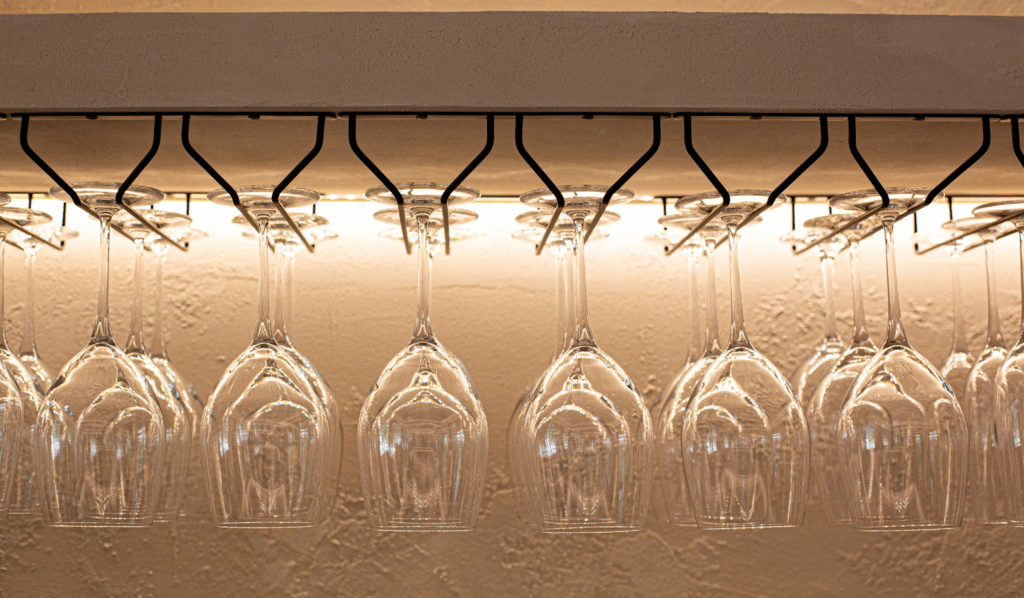
Choosing the right rack begins with matching the design to the size and weight of your stemware. Rails should hold bases securely without pinching stems, which can cause stress and eventual breakage. Heavier red wine glasses or crystal stemware require racks made from durable materials with thicker rails, while lighter flutes and coupes can rest comfortably in slimmer slots.
A well-fitted rack not only supports the glass safely but also makes storing and retrieving them effortless. The wrong size can lead to wobbling or uneven hanging, which increases the risk of accidental falls.
2. Mounting and Load Limits
How a rack is installed is just as important as the rack itself. Mounting directly into wall studs ensures the structure can support the combined weight of your collection. If studs are unavailable, heavy-duty anchors designed for shelving are essential to prevent sagging or collapse over time.
Always check manufacturer guidelines for load limits and avoid overfilling racks, even if space allows. Keeping within safe weight ranges protects both the glasses and the rack, ensuring long-term stability.
3. Cleaning Routines for Exposed Racks
Because glasses on hanging racks are exposed, they gather dust and airborne grease more quickly than those stored in cabinets. Wiping down the rack weekly keeps rails clean and prevents buildup that could transfer to glass bases.
Before serving, give hanging glasses a quick rinse and polish to restore their clarity. This small routine ensures they are guest-ready while maintaining their brilliance and hygiene, even when stored in open spaces.
Proper Storage for Stemmed vs Stemless Wine Glasses
Unique Risks for Stemless Bowls
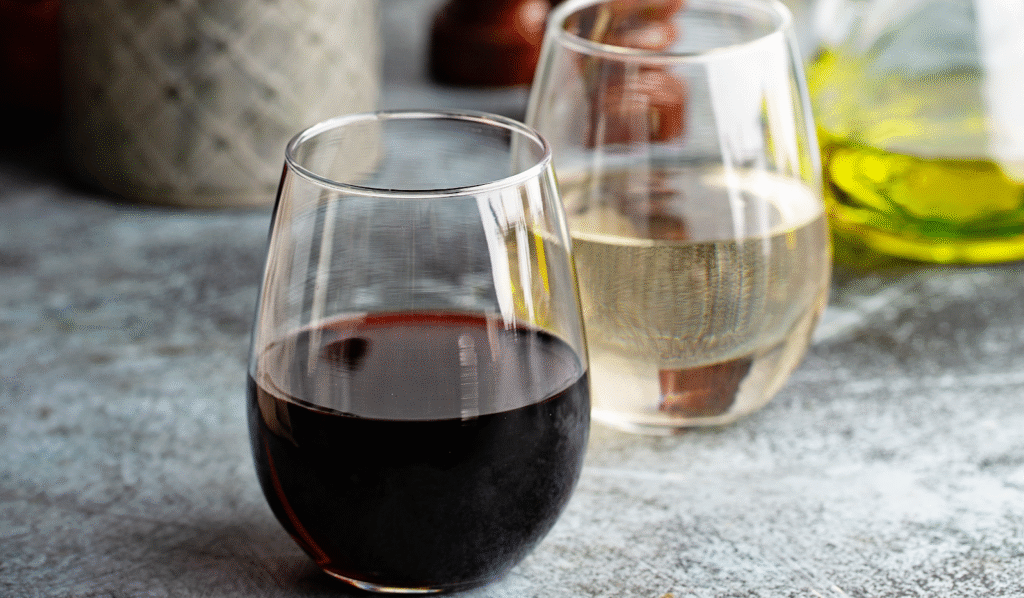
Stemless wine glasses may feel sturdy, but their rounded bowls make them more prone to rolling and rim damage when stored loosely. Without stems, they also sit closer to hard surfaces, which increases the chance of scratches at the base and lip. To protect them, use padded dividers, felt-lined drawers, or individual boxes that hold each glass securely in place.
Mixed Collections
When storing both stemmed and stemless glasses, separate them into distinct groups. This prevents accidental collisions when reaching for one type, since stemmed glasses are taller and more fragile while stemless ones are wider and heavier. Keeping them apart not only reduces the risk of chips but also creates a more organized system that makes the right glass easy to grab.
How to Store Crystal and Standard Wine Glasses
Leaded Crystal Considerations
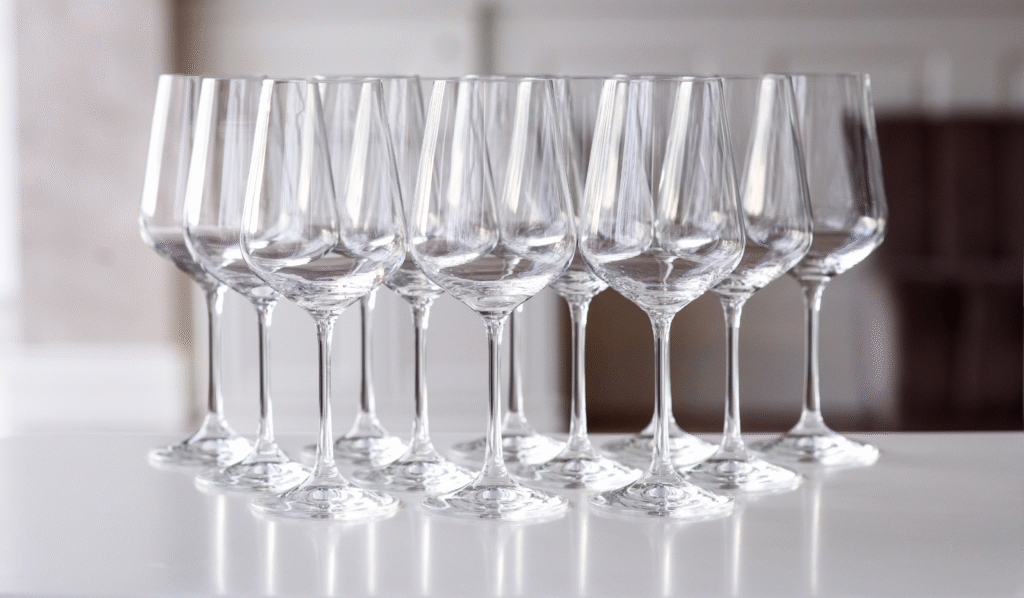
Leaded crystal is renowned for its brilliance and weight, but it is more sensitive than standard glass. Because crystal is slightly porous, it should always be stored in a well-ventilated space. Trapped moisture can cause haziness or even leach minerals over time. Avoid wrapping crystal in plastic for extended periods, since this restricts airflow and can lead to a dull finish. Instead, use breathable pouches, padded cases, or cloth wraps that allow circulation while still shielding against dust and scratches.
Thin Crystal Care
Ultra-thin crystal is the most delicate form of stemware. Its rims and bowls can scratch or crack with minimal contact. To prevent damage, place felt pads, microfiber cloths, or padded dividers between each piece when storing multiple glasses together. Never stack thin crystal or let bowls touch directly. Handle these glasses by the bowl or stem base, avoiding pressure on the rim, which is the most fragile part.
Everyday Soda-Lime Glass
Standard soda-lime glass is more durable and forgiving, making it well suited for daily use. It can tolerate minor bumps and less cautious handling, but proper storage still enhances its longevity. Padded shelf liners protect the base from wear, while enclosed cabinets shield against dust and grease. Even with stronger everyday glass, taking a few extra steps in storage keeps them looking polished and ensures they remain ready for guests at any moment.
Comprehensive Care and Storage Practices for Wine Glass Longevity
Pre-Storage Cleaning for Lasting Shine
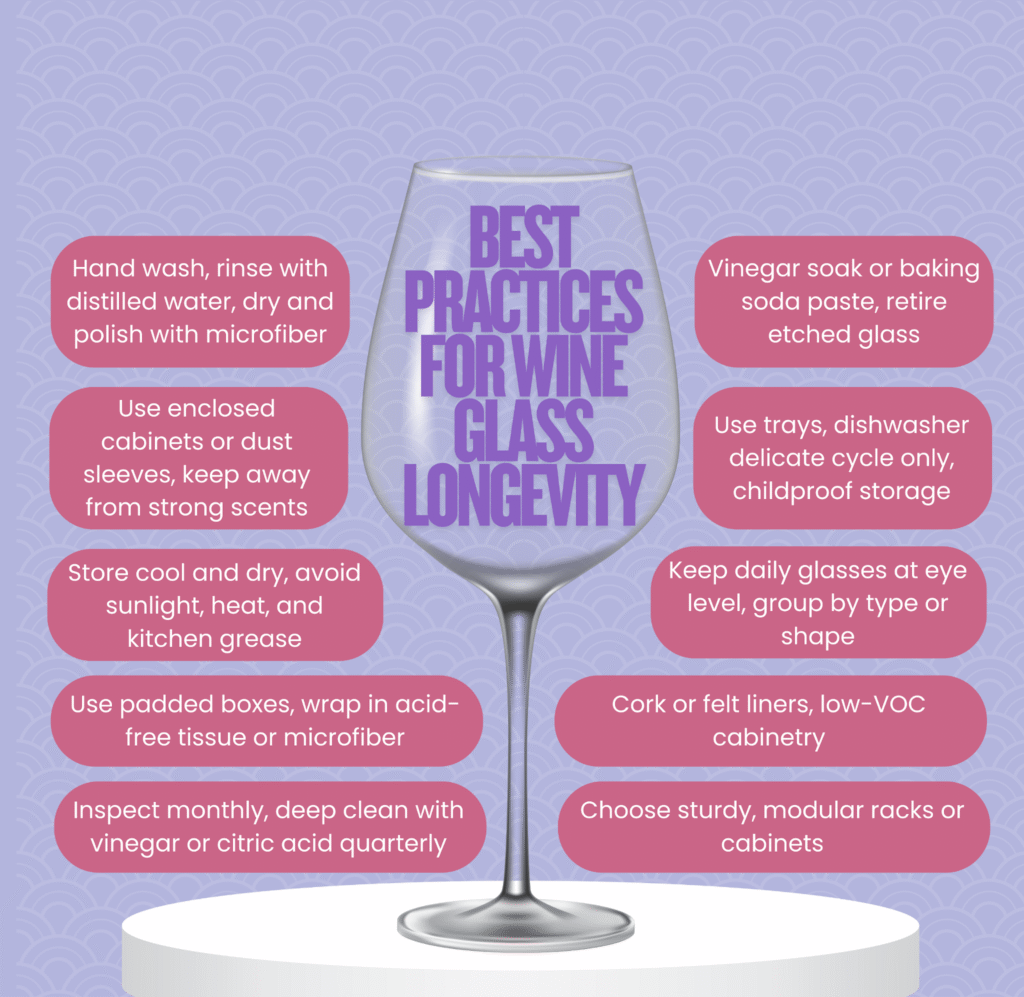
The foundation of wine glass care begins before storage. Wash glasses by hand with warm water and mild detergent, avoiding harsh chemicals that etch the surface. Always remove rings, watches, or bracelets to prevent accidental scratches. Handle each glass gently by the bowl or base, never twisting the stem, which can snap under pressure.
In hard water areas, finish with a rinse using distilled or filtered water to prevent cloudy spots caused by mineral deposits. For drying, use the two-towel method: one towel holds the base securely while the other dries the bowl and stem. Microfiber cloths work best for a streak-free finish. Finally, polish by supporting the base and twisting the bowl gently with a clean cloth. This restores clarity without putting strain on delicate stems.
Odor and Dust Control
Storage location directly influences clarity and freshness. Avoid keeping glasses near strong-smelling items like spices, scented candles, or cleaning supplies, as odors can cling to the bowl. Dust is another major factor, so opt for glass-front cabinets or drawer inserts that protect while still allowing visibility. For open racks, use breathable dust sleeves or bell caps to reduce buildup without trapping moisture.
Temperature, Humidity, and Light
Glasses should be stored in a cool, dry space. Moderate humidity prevents static dust accumulation but avoids conditions that encourage mold. Keep cabinets away from direct sunlight, since UV exposure weakens glass integrity and can cause discoloration. Kitchens present unique challenges, as steam, grease, and dishwasher vent heat quickly dull surfaces. For longevity, store stemware away from stoves and dishwashers.
Transport and Off-Season Storage
When moving or storing rarely used glassware, original packaging is ideal since it offers a perfect fit. If that is not available, padded aftermarket cases work well. Wrap each glass in acid-free tissue, microfiber, or felt inserts, avoiding printed or acidic paper that can transfer stains. Label sets by type or occasion for easy retrieval later.
Maintenance Routines That Prevent Dullness
Regular inspection and cleaning prevent long-term damage. A monthly check for chips, cracks, or fading clarity helps you retire compromised glasses before accidents occur. For glasses stored in open racks, a quick refresh with a light steam and microfiber polish restores shine. Every few months, perform a deep clean by soaking in diluted vinegar or citric acid to remove mineral buildup, followed by a thorough rinse.
Troubleshooting Cloudiness and Film
Not all haze has the same cause. Hard water leaves mineral residue, detergents create film, and etching results in permanent dullness. Soaking in distilled water with vinegar removes most haze, while a gentle baking soda paste lifts residue without scratching. If the glass feels rough to the touch, etching has occurred and the piece should be retired.
Safety and Handling Essentials
Safe handling extends glass life as much as proper storage. Use trays or carriers when moving multiple glasses instead of holding them by the stems, which increases the risk of clinking and breakage. If a dishwasher must be used, select the delicate cycle, space glasses apart, and let them cool before removing. Childproofing measures like cabinet latches or placing racks higher reduce risks in busy households.
Organize by Use to Save Time
An organized system protects glasses and simplifies serving. Keep everyday glasses at eye level for quick access, and store specialty sets such as tasting or sparkling glasses on higher or lower shelves. Grouping by bowl shape or capacity makes pairing glasses with wine styles effortless. To avoid mismatches, track your collection with simple shelf tags or a spreadsheet.
Eco-Friendly Storage Upgrades
Sustainability can pair with preservation. Choose liners and dividers made from cork, bamboo, or recycled felt to protect bases and stems naturally. Cabinets finished with low-VOC treatments keep indoor air clean and reduce chemical exposure to your glassware.
Buying Storage Solutions That Last
Long-term protection begins with quality furniture and storage systems. Look for cabinets or racks with solid construction, smooth finishes, and sturdy joints that will not wear against delicate glass. Modular shelving and racks offer flexibility as your collection grows, ensuring you always have the right storage space without compromising protection.
The Lasting Value of Thoughtful Wine Glass Storage
Investing care in how you store wine glasses preserves more than just their appearance. It safeguards their role in every tasting experience, keeping each pour elegant, clear, and enjoyable. With thoughtful storage, your collection of glasses and wine accessories remains protected, functional, and ready to enhance every occasion. At Wine N Gear, our glasses and barware are crafted with the quality and durability to shine at any occasion and for every use.
FAQs
How do you store wine glasses long term?
For long-term storage, wrap each glass individually in acid-free tissue, microfiber sleeves, or felt pouches. Place them upright in padded boxes with dividers to prevent shifting and scratching. Store the boxes in a cool, dry, well-ventilated area away from direct sunlight, heat, and humidity. Avoid sealing crystal in plastic, which traps moisture and can cause dullness over time.
How do you keep wine glasses shiny?
Shine starts with the right cleaning technique. Wash by hand with warm water and mild detergent, then rinse with distilled water to prevent mineral deposits if you live in a hard water area. Dry immediately with a lint-free microfiber cloth, using one towel to hold the base and another to polish. A final gentle polish before storage ensures glasses stay streak-free and sparkling.
How do you stop wine glasses from going cloudy?
Cloudiness is usually caused by hard water deposits, detergent film, or improper drying. Prevent it by rinsing thoroughly with distilled or filtered water and drying completely. If glasses become cloudy, soak them in a mixture of vinegar and warm water, then polish with microfiber. For stubborn residue, a gentle baking soda paste can help lift haze without scratching.
Which way should wine glasses be stored?
The safest method is storing glasses rim up in a closed cabinet. This prevents rims from carrying the glass’s weight and reduces stress on the most fragile part. Rim down is only advisable if you use soft shelf liners or felt pads that cushion the edges.
Is it better to store wine glasses upside down?
In most cases, no. Upside-down storage puts unnecessary pressure on delicate rims and increases the chance of chipping. It can be acceptable on racks designed specifically for rim-down hanging, but rim-up storage in a cabinet is generally best for longevity.
How do you wrap wine glasses for storage?
Wrap each glass separately in acid-free tissue, bubble wrap, or microfiber pouches. Focus on protecting the rim and stem, which are most vulnerable to breakage. Place glasses upright in a sturdy box with cardboard or foam dividers to prevent movement during storage or transport.
Is bubble wrap enough to protect wine glasses during moving?
Bubble wrap offers some protection but is not enough on its own. For safe transport, combine it with dividers or padded boxes to keep glasses separated. Use acid-free tissue or microfiber between layers for extra cushioning and to avoid scratches.